
🇬🇧 The Technical Recession: How Will the UK Economy Recover and Sustain Growth?
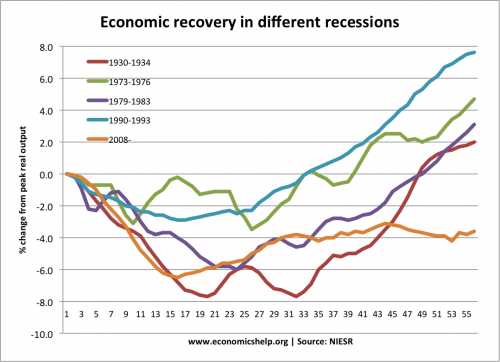
The UK’s economy recently experienced a “technical recession,” defined as two consecutive quarters of negative GDP growth (in late 2023). While shallow, this downturn underscored the country’s vulnerability to global headwinds and domestic structural weaknesses. The recovery pathway is not expected to be a dramatic surge but rather a slow, gradual re-acceleration, highly dependent on key policy shifts and the resilience of households and businesses. The critical challenge is not merely exiting the recession but achieving a higher, more sustainable rate of long-term economic growth after years of stagnation .
The Immediate Drivers of the Recovery
The initial rebound is predominantly fueled by a shift in the monetary policy cycle and an improvement in real disposable income. As inflation has fallen and the Bank of England considers easing its high interest rates, the financial pressure on businesses and households is starting to abate. Lower inflation means that wage increases, even if modest, translate into higher purchasing power, which stimulates consumer spending—the engine of the UK’s predominantly service-based economy. Forecasters generally expect a weak recovery into 2024 and 2025, with annual GDP growth struggling to break the 1% barrier. This rebound is characterized by a “return to growth” rather than a robust, high-momentum expansion.
Structural Weaknesses Hampering Long-Term Growth
Beyond the immediate cycle, the UK’s path to a stronger recovery is complicated by deeply entrenched supply-side weaknesses. The main constraint is weak productivity growth, a long-standing issue where output per hour has barely improved for over a decade. Additionally, business investment remains subdued, held back by persistent economic uncertainty, a complex planning system, and lingering trade friction with the European Union. Without significant capital expenditure on new technology, machinery, and infrastructure, the fundamental capacity of the economy to grow without triggering inflation will remain limited. Policymakers recognize that unlocking faster, sustainable growth requires addressing these long-term structural impediments, particularly through boosting investment and skills.
Policy Strategies for a Durable Expansion
Both the government and the opposition have signaled a clear focus on investment and stability as the core pillars of their recovery strategies. The goal is to move beyond short-term fixes and foster a durable expansion. Key policy levers being considered or implemented include:
- Public Investment: Pledges for substantial long-term public capital investment in critical infrastructure, R&D, and the energy transition, often through mechanisms like a ‘National Wealth Fund,’ aimed at crowding in private finance.
- Regulatory and Planning Reform: Efforts to streamline planning laws and regulatory processes to accelerate the construction of housing and major infrastructure projects, thereby tackling supply-side constraints.
- Fiscal Stability: Committing to new fiscal rules designed to reassure markets by demonstrating a clear path to reducing national debt and maintaining budget discipline.
These growth plans aim to transform the UK’s economic model by targeting sectors of high productivity potential—such as science, technology, and green industries—to ensure future growth is both stronger and geographically “levelled up.” The ultimate success, however, will rely on whether political stability and clear, consistent policies can restore the business confidence necessary for private firms to commit to large-scale, long-term investments.
