
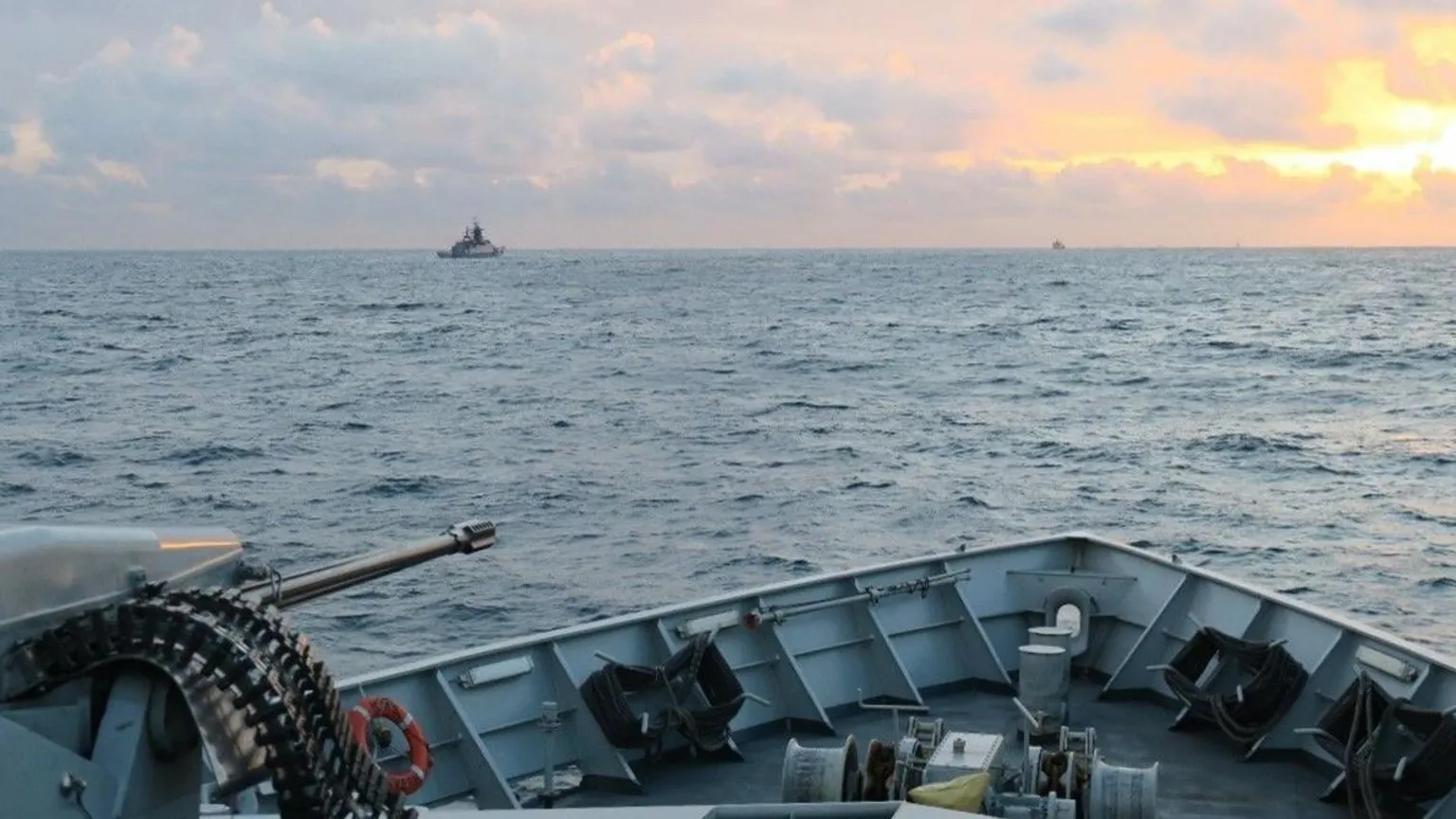
The English Channel, A Theatre of Discrete but Constant Confrontation
The Dover Strait and the English Channel, among the busiest and most strategic maritime passages globally, have once again become the scene of a show of naval force and vigilance. The UK Ministry of Defence (MoD) confirmed that the Royal Navy recently intercepted two Russian warships sailing westbound. This maneuver, while taking place in international waters, is part of a worrying pattern of increasing and aggressive Russian activity around UK shores.
The incident, which follows closely on the detection of a Russian spy ship using dangerous tactics off the coast of Scotland, highlights a palpable geopolitical tension. Our goal is to dissect this “interception”: what are the vessels involved, why is their presence closely monitored, and what are the implications of this heightened naval activity for European security?
I. The Detailed Interception: British Vigilance at the Heart of Maritime Strategy
The Royal Navy never allows the passage of foreign warships, especially Russian ones, to occur without direct supervision. The recent operation illustrates the responsiveness and the systematic tracking doctrine implemented by the UK and its allies.
A. Key Actors in the Pursuit Operation
The interception was conducted by the Royal Navy patrol vessel, HMS Severn. Its role is primarily tracking and close observation—an essential task for assessing the foreign vessel’s intentions and guaranteeing maritime safety in the area.
The identified Russian vessels were:
- RFN Stoikiy: A corvette (a small, fast warship) with significant combat capabilities, part of the Russian Baltic Fleet.
- The Yelnya: A tanker, whose function is to refuel warships with fuel and other provisions at sea, highlighting a capability for projection over long distances.
These two ships were sailing west together, transiting the Dover Strait to enter the English Channel. Even though this transit occurred in international waters, approaching the UK’s Exclusive Economic Zone (EEZ) and territorial waters necessitates a constant naval surveillance presence.
B. Specific Roles of the Russian Vessels: A Multifunctional Flotilla
Understanding the nature of the Russian ships is crucial:
- The Corvette (Stoikiy): This is not a simple escort vessel. Modern Steregushchiy-class corvettes, like the Stoikiy, are designed for Anti-Submarine Warfare (ASW), surface warfare, and can carry sophisticated missile systems. Their presence in such a sensitive shipping corridor is a clear message about the capabilities and reach of the Russian Navy.
- The Tanker (Yelnya): The tanker represents logistical support. Its presence means the warship can operate far from its home ports for an extended period, increasing the duration and range of any potential mission, whether it be training or surveillance.
II. The Naval Protocol: From Interception to NATO Cooperation
Interception on the high seas does not imply an immediate hostile engagement but rather a game of shadow strictly codified by international maritime law.
A. The Doctrine of “Shadowing”
The action of HMS Severn is a classic example of “shadowing.” Under international law, Russian military vessels have the right of innocent passage in international waters. However, the UK has an obligation to monitor them closely as soon as they approach its area of interest:
- Constant Observation: HMS Severn remained at a safe observation distance, ready to respond to any “unexpected activity.” This watch is essential for documenting the Russian vessels’ maneuvers (speed, direction, radar activity) and ensuring they do not engage in illegal operations (espionage or disruption).
- Passive Deterrence: The mere fact of being escorted by a Royal Navy vessel acts as a deterrent, making any attempt at stealthy espionage or testing of coastal defenses more difficult and risky.
B. Transnational Cooperation: The Role of NATO Allies
A key point of this operation is the transfer of surveillance duties. After escorting the Russian ships past a certain line, the MoD announced that monitoring was handed over to a NATO ally off the coast of Brittany, in northwest France.
- Collective Security: This handover is a perfect illustration of collective security and seamless coordination within the North Atlantic Treaty Organization. NATO members share the responsibility of tracking the movements of fleets considered potential threats, ensuring no vessel operates without being traced.
- Logistical Efficiency: This allows British assets, like HMS Severn, to quickly return to their operational area without sacrificing the continuity of surveillance.
III. The Context of Escalation: The Shadow of Espionage and Increased Aggression
This interception cannot be understood without placing it in the context of alarmingly intensifying Russian maritime hostility.
A. The Yantar Incident: A Dangerous Precedent
The event was preceded, the previous week, by the identification of the Russian spy ship Yantar off the coast of Scotland. This incident is much more serious because it involves a direct threat and active confrontation tactics:
- Sophisticated Spy Ship: The Yantar is known for its deep-sea surveillance capabilities, including the inspection of vital undersea communication cables (fiber optics).
- Dangerous Tactic: The vessel used lasers to disrupt Royal Air Force (RAF) pilots tracking its movements overhead. Defence Secretary John Healey called this action “deeply dangerous,” emphasizing the threat it poses to personnel safety.
B. The 30% Increase in Russian Naval Activity
These incidents are not exceptions. John Healey revealed last week that there had been a 30% increase in Russian vessels threatening UK waters over the past two years.
- Evidence of Aggression: Healey explicitly stated that this surge is evidence of “Russian aggression right across the board,” the impact of which extends far beyond the conflict in Ukraine and affects the security of all of Europe.
- The Political Message: The Defence Secretary conveyed a firm and direct message to Russian President Vladimir Putin: “We see you. We know what you’re doing. We are ready.” This language denotes a verbal escalation that accompanies the operational escalation at sea.
IV. A Maritime Chess Game: Precedents and Russian Strategy
It is important to note that this is not the first time the RFN Stoikiy has sailed near British territory, which reveals the tactics of the Russian Navy.
A. The May Precedent and the “Flying Tigers”
Last May, the Royal Navy had already dispatched two vessels as well as the 814 Naval Air Squadron, nicknamed the “Flying Tigers,” to shadow the Stoikiy as it crossed the English Channel.
- Escort Objective: The Russian ship was then heading west to meet two merchant vessels, the Sparta IV and the General Skobelev, returning from the Mediterranean. The entire group then headed back to the Baltic Sea, watched by HMS Hurworth.
- The Civilian-Military Mix: These maneuvers involving warships and merchant vessels suggest a strategy aimed at normalizing the military presence in civilian areas or masking specific activities under the guise of commercial transport.
B. The Strategic Importance of the English Channel and the Dover Strait
The English Channel is not chosen at random for these transits. It is one of the most vital maritime choke points for global trade.
- Pressure and Surveillance: By transiting its ships there, Russia is not only testing the responsiveness of NATO naval forces (UK, France) but also asserting its ability to project power into Western waters, even outside declared conflict zones.
- The Right to Observation: As long as Russian ships comply with the right of innocent passage, NATO navies can only observe. It is this right that Russia exploits to conduct its intelligence and demonstration activities.
Unavoidable Vigilance Against Maritime Interference
The interception of RFN Stoikiy and the Yelnya by HMS Severn is a routine event in its protocol, but alarming in its frequency and context. It confirms the necessity of uninterrupted naval vigilance on the part of the UK and its NATO partners.
The documented increase in Russian activity, combined with observed dangerous tactics (such as the Yantar incident), poses a long-term strategic challenge. The Royal Navy is proving its ability to respond effectively and in coordination with its allies. However, as long as Russia continues to use its maritime assets to test limits and disrupt European security, the English Channel will remain a high-tension zone, demanding continuous investment in maritime defence and intelligence.
