
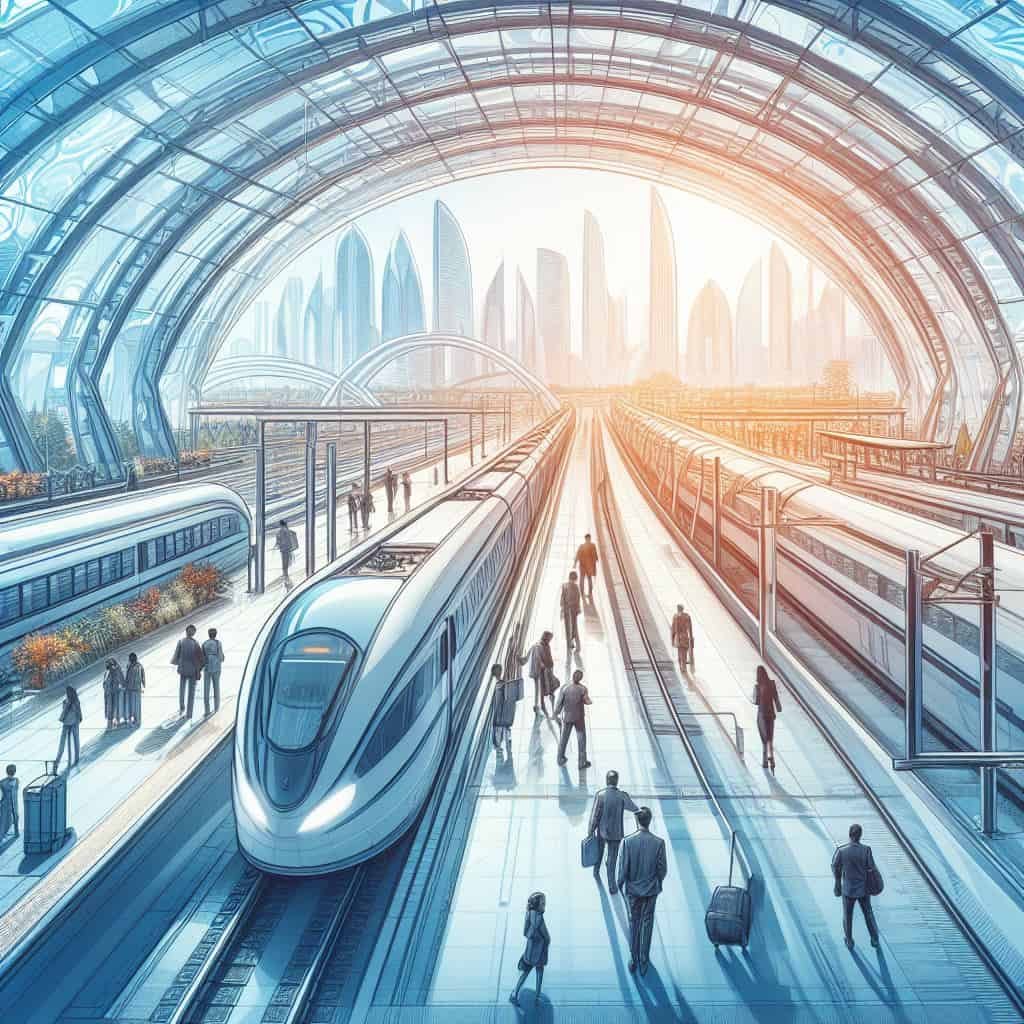
The Resurgence of Rail Travel: Why Now?
Rail travel is becoming the preferred mode for intercity and international trips, particularly in Europe and Asia, for several reasons:
1. The Sustainability Imperative
- Low-Carbon Alternative: Rail is significantly more energy-efficient and produces far lower carbon emissions per passenger-kilometre compared to both road and air travel. Many high-speed rail networks are entirely electrified and powered by renewable energy, positioning rail as a major climate solution.
- Replacing Flights: For journeys between 300 to 700 miles (480 to 1,130 km), high-speed rail is rapidly replacing short-haul flights as travellers seek to reduce their personal carbon footprint.
2. Comfort, Convenience, and the “Slow Travel” Trend
- City-Centre to City-Centre: Trains provide direct access to central business districts and downtown areas, eliminating the need for long, costly transfers to and from often remote airports.
- Superior Experience: Passengers enjoy more spacious seating, the ability to walk around, and better on-board amenities (Wi-Fi, dining cars). This offers a more relaxing experience compared to the stress of airport security and long-haul driving.
- The Night Train Revival: Europe, in particular, is seeing a significant revival of night train services, offering an affordable and efficient way to cover long distances while sleeping, avoiding the need for a hotel night.
3. Economic and Societal Benefits
- Reduced Congestion: Shifting passengers and freight from highways and skies to rail reduces road congestion and wear-and-tear on public road networks.
- Economic Hub Creation: High-speed rail lines stimulate local economic development by increasing connectivity and linking major cities and economic hubs more tightly.
Rail Infrastructure Modernization and Technology
The current wave of investment is focused on modernizing aging systems and integrating digital technology to improve safety, speed, and efficiency.
1. High-Speed Rail (HSR) Networks
HSR is the cornerstone of modernization efforts worldwide, with China, Japan, and Europe leading the expansion.
- Goal: Create seamless, high-capacity corridors that drastically cut travel times (e.g., aiming to cut Berlin-Copenhagen travel time by almost half).
- Benefits: Increased network capacity, reduced dependency on fossil fuels, and a competitive travel alternative to short-haul aviation.
2. Advanced Signalling and Control
- ERTMS (European Rail Traffic Management System): This is the European standard for train control and command, using digital communication to replace older, disparate national systems. It allows for:
- Increased Safety: Automatically stopping a train if it exceeds a speed limit or passes a stop signal.
- Interoperability: Enabling a single train to travel seamlessly across multiple national borders.
- Automated Train Operation (ATO): This technology, often layered over ERTMS, allows for computer control of train movement, optimizing energy usage and allowing for more trains to run on the same line (increased capacity).
3. Digitalization and Smart Maintenance
- Internet of Things (IoT) Sensors: Tracks, bridges, and rolling stock are being equipped with sensors to collect real-time data on their condition.
- Predictive Maintenance: This data allows operators to move from fixed-schedule or reactive repairs to predictive maintenance, fixing problems (like track wear or component failure) before they cause delays or accidents.
Key Challenges to Modernization
Despite the enthusiasm, the transition is not without significant hurdles:
- Aging Infrastructure: Many rail networks, particularly in North America and parts of Europe, are over a century old. Integrating cutting-edge digital technology with decades-old mechanical systems is costly and complex.
- Financing: Rail projects require massive, upfront capital investment. Securing long-term, stable funding—often through a mix of public and private investment (e.g., Public-Private Partnerships or PPPs)—is a major challenge.
- Interoperability and Harmonization: Especially in Europe, technical and regulatory differences (e.g., track gauges, electric power systems, and varying signalling) between countries must be fully harmonized to ensure seamless cross-border travel.
- Skilled Workforce: The industry faces a shortage of skilled workers, especially in high-tech fields like digital signalling, cybersecurity, and data analysis needed to operate and maintain the modernized systems.

The resurgence of rail transport is made possible by the ambitious modernization of infrastructure.