
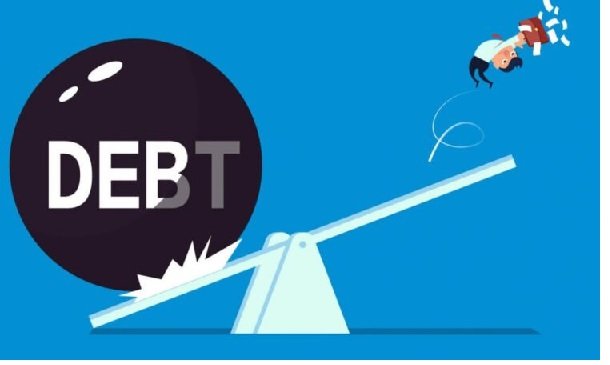
The national debt, the total accumulation of a government’s past deficits, is often discussed as a distant economic indicator. Yet, its size and the cost of servicing it have a profound and immediate impact on the public services that citizens rely on every day—from healthcare and education to infrastructure and security.
The relationship is not a simple one of cause and effect, but rather a complex interplay of fiscal priorities, economic growth, and global financial market confidence.
1. The Direct Squeeze: Crowding Out Public Spending
The most direct and unavoidable consequence of a large national debt is the escalation of debt interest payments. This spending is classified as “Annually Managed Expenditure” (AME) and is non-negotiable; a government must pay its bondholders interest or risk defaulting.
When debt and interest rates are high, this payment category can quickly consume a substantial portion of the annual budget, effectively crowding out funding for discretionary public services.
| Public Service Spending | Description | Impact of High Debt |
| Debt Interest | Mandatory payments to bondholders. | Massive Drain: Becomes one of the largest spending areas, diverting billions from other services. |
| Healthcare (e.g., NHS) | Day-to-day services and capital investment. | Service Reduction: Must absorb real-terms cuts, leading to staff shortages, longer waiting lists, and decaying infrastructure. |
| Education | Schools, university funding, and teacher salaries. | Quality Erosion: Budgets are squeezed, leading to cuts in non-statutory services and insufficient investment in technology and facilities. |
| Public Investment | Infrastructure, R&D, and long-term capital projects. | Future Stagnation: Governments often cut ‘capital spending’ first to meet short-term deficit targets, jeopardising future economic growth and productivity. |
This trade-off means that every billion pounds or dollars spent on interest is a billion not spent on a new school, a hospital wing, or a nurse’s salary.
2. Long-Term Economic Drag: Reduced Fiscal Space
A sustained high level of national debt can inflict long-term damage on the entire economy, further impairing the government’s ability to fund public services.
A. Higher Future Taxes and Intergenerational Inequity
Economic theory often suggests that a high national debt implies a greater future tax burden. This concept, sometimes linked to Ricardian Equivalence, posits that citizens recognize that current borrowing must eventually be repaid, either through higher taxes or reduced spending.
In practice, this creates intergenerational inequity: today’s spending (financed by debt) is ultimately paid for by future generations through higher taxes, lower public investment, or both. This transfers the burden of current welfare and consumption to those who had no vote on the underlying policy.
B. Reduced Private Investment (Crowding Out)
In financial markets, excessive government borrowing increases the overall demand for credit, which can put upward pressure on real interest rates. Higher interest rates make it more expensive for private businesses to borrow for investment (e.g., new machinery, technology, and expansion).
This “crowding out” of private investment ultimately slows economic growth and productivity. With slower GDP growth, the government’s tax revenues are constrained, making the debt-to-GDP ratio harder to reduce and locking public services into a cycle of austerity.
3. The Threat to Fiscal Credibility
While manageable at stable levels, an accelerating national debt poses a risk to a nation’s fiscal credibility. If investors lose confidence in the government’s ability or willingness to manage its finances, they may demand a higher interest rate (a greater term premium) to compensate for the perceived risk.
This spiral of rising debt and rising interest rates can lead to:
- Sudden Budget Crises: A rapid, unanticipated increase in debt servicing costs can destroy a government’s budget plans, forcing sudden, deep, and disruptive cuts to public services to restore market confidence.
- External Constraints: A country with fragile finances may find itself subject to the policy conditions of international lenders (like the IMF), which almost invariably require cuts to public spending and structural reforms—a form of externally-imposed austerity.
A Balancing Act
The national debt is a powerful financial tool that can be used productively—for instance, to fund high-return investments like research and infrastructure, or to manage economic crises like recessions and pandemics. In these scenarios, the long-term benefits to the economy can outweigh the costs of borrowing.
However, when debt is accumulated to fund routine, day-to-day spending (a structural deficit) without a corresponding increase in long-term economic capacity, it becomes a severe liability. It transforms into a fiscal straitjacket, limiting the government’s ability to protect and improve public services, thereby eroding the core social contract between the state and its citizens.
The most significant immediate impact of high national debt on public services is the displacement of operational funds by mandatory interest payments, leading to an environment of sustained austerity.
