
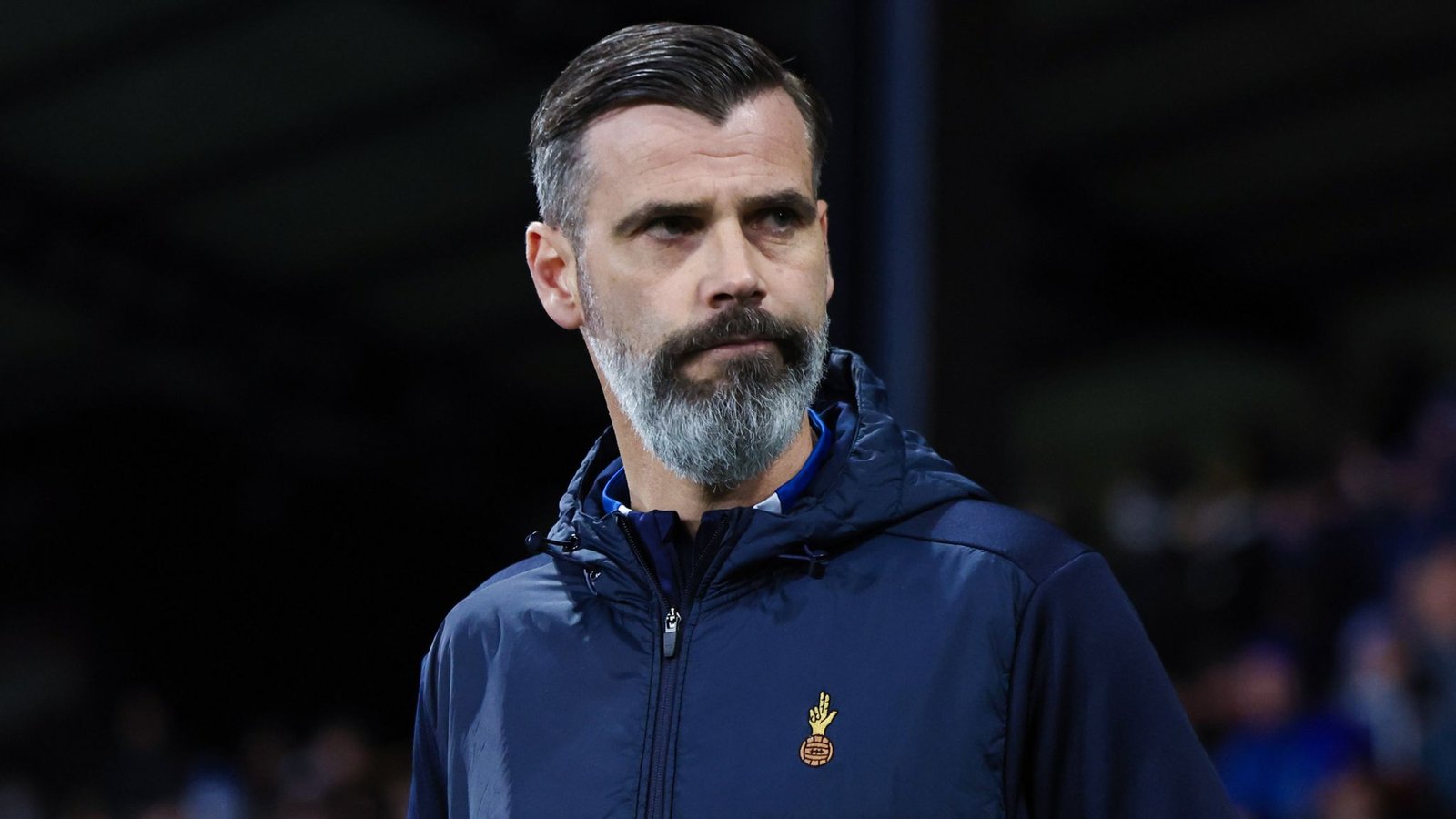
The atmosphere at Rugby Park has shifted dramatically this week. In a move that highlights the ruthless nature of modern football, Kilmarnock Football Club has officially announced the Stuart Kettlewell sacking following a dismal run of form. For followers of the beautiful game across the United Kingdom, this decision underscores the high stakes involved in top-flight football, where patience is often a luxury that boards cannot afford when the threat of the drop looms large.
Main Keyword: Stuart Kettlewell sacking LSI Keywords: Scottish Premiership, Relegation battle, Rugby Park, Interim manager, Festive schedule.
A Season in Freefall: The Numbers Don’t Lie
While the dismissal of a manager is always a human story involving the loss of a job, in football, it is almost always dictated by cold, hard statistics. The decision to part ways with Kettlewell was precipitated by an alarming decline in performance. The team is currently enduring a ten-match winless run, a streak that includes eight painful defeats.
For a club with ambitions of stability, sitting second bottom in the Scottish Premiership is a red alert situation. Currently, Kilmarnock finds itself just three points above Livingston, a rival that arguably holds a psychological advantage with a game in hand. In the context of a relegation battle (the fierce competition to avoid being demoted to a lower league), such a precarious position often forces the hand of club directors who fear the financial and sporting consequences of dropping out of the top tier.
From Promise to Peril: A Tale of Two Halves
The irony of the current situation lies in how the 2025-26 campaign began. Stuart Kettlewell, 41, arrived at the club with a solid reputation following stints at Motherwell and Ross County. He stepped into the shoes of Derek McInnes, who had departed for Hearts, and initially, the transition seemed seamless.
Kettlewell enjoyed a robust start, securing six victories in his first 13 matches. This early success suggested that the club was on an upward trajectory. However, consistency is the holy grail of football management. The momentum evaporated spectacularly, replaced by a six-game losing streak. A brief respite of two draws failed to stop the rot, leading to two further defeats that ultimately sealed his fate. This drastic turnaround serves as a stark reminder of how quickly narratives change in professional sports.
The Interim Era: Kris Doolan Steps Up
With the departure of Kettlewell and his assistant Stevie Frail, the Kilmarnock board has moved quickly to install a temporary solution to stabilize the ship. Kris Doolan has been named as the interim manager (a temporary coach appointed to lead the team until a permanent replacement is found).
Doolan is a familiar figure in Scottish football circles, primarily known for his time managing Partick Thistle. His immediate mandate is not necessarily to overhaul the club’s philosophy, but to arrest the slide in results and restore confidence within the dressing room. The psychological aspect of management becomes paramount in these scenarios; Doolan must convince a squad of players who have forgotten how to win that they are capable of turning the tide.
The Board’s Verdict: “Change is Required”
The official statement from Kilmarnock was concise but telling. While thanking “Stuart and Stephen for their efforts,” the board emphasized that “change is required to best serve the interests of Kilmarnock FC.”
Crucially, the statement noted, “We believe there is plenty of quality in the squad.” In the slightly academic language of football administration, this is often a tacit suggestion that the players are underperforming relative to their ability, and that a new voice is needed to unlock that potential. It places the onus back on the squad to prove that their league position is a false representation of their talent.
Facing the Critical Festive Schedule
The timing of this decision is strategic. We are approaching the renowned festive schedule, a period in UK football around Christmas and New Year where matches are played in rapid succession. This is often viewed as a “make or break” period for teams at both ends of the table.
With a crucial home fixture against Falkirk on the horizon this weekend, the board is gambling on the “new manager bounce”—a phenomenon where a change in leadership leads to an immediate, short-term upturn in results due to renewed player motivation. The club has issued a rallying cry to supporters to “stick with us,” acknowledging that the atmosphere at Rugby Park will be a decisive factor in their survival bid.
As the winter chill sets in, the heat is firmly on Kilmarnock to salvage their season. The Stuart Kettlewell sacking is not just an end, but a desperate new beginning in the fight for Scottish Premiership survival.
