
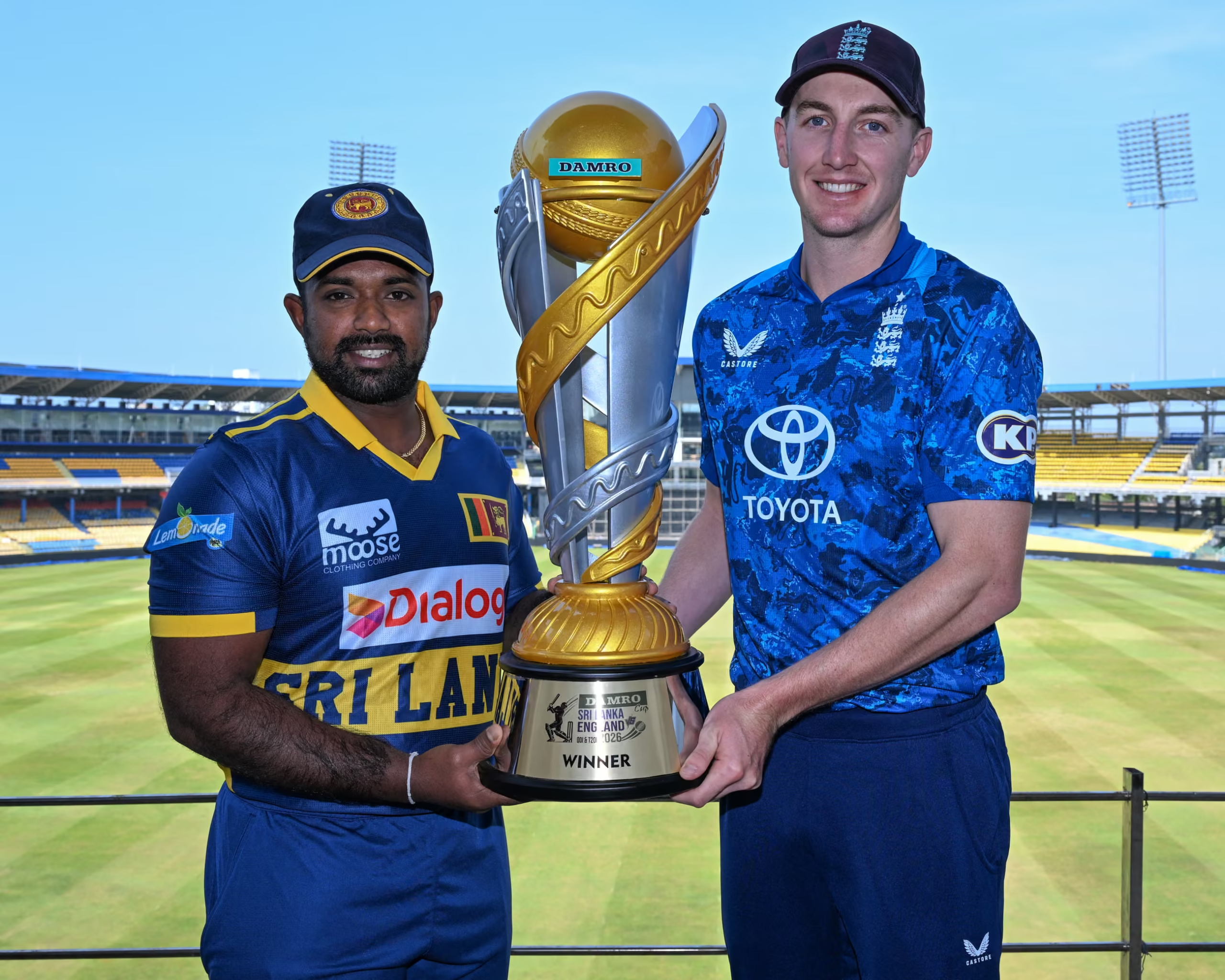
As the T20 World Cup looms on the international horizon, this ODI (One Day International) series between Sri Lanka and England arrives at a pivotal moment. For both nations, this clash at the Khettarama Stadium represents more than just a technical fixture; it is a genuine opportunity for psychological redemption following periods of internal and sporting turbulence.
Context: Two Giants Seeking Stability
England arrives on Sri Lankan soil still wearing the scars of a grueling Ashes (the historic series against Australia) campaign. Beyond the on-field results, captain Harry Brook began the tour with public apologies regarding off-field disciplinary incidents. This emotional fragility is reflected in their recent form, marked by a string of losses that currently places them eighth in the global rankings.
Meanwhile, Sri Lanka is also navigating a transition phase. Charith Asalanka, though retained as ODI captain, recently lost his leadership role in T20Is. The absence of spearhead seam-bowler (a fast bowler who uses the ball’s stitching to cause deviation) Dushmantha Chameera, who is being rested, forces the hosts to rethink their defensive strategy around their specialist rotation.
The Importance of Ranking Points
While the timing may seem inconvenient, the mathematical stakes are high. To secure direct qualification for the next World Cup without facing qualifiers, staying within the world’s top nine is essential.
- Sri Lanka (5th) aims to consolidate its position and close the gap on Pakistan.
- England (8th) desperately needs to halt its slide to avoid unnecessary pressure in the coming months.
The Battle of the Spin-Doctors in Colombo
The Khettarama stadium is renowned as a paradise for spin (bowlers who apply rotation to the ball to make it turn after bouncing). Sri Lanka enters as favorites in this department with a formidable trio: Wanindu Hasaranga, Maheesh Theekshana, and the young prodigy Dunith Wellalage.
However, England possesses a secret weapon in Adil Rashid. This experienced legspinner (a wrist-spinner who turns the ball from the leg side to the off side for a right-handed batter) has frequently troubled Sri Lankan batters in the past. The ability of English batters like Joe Root or Jos Buttler to read trajectory variations on a potentially damp pitch will be the deciding factor of this series.
Captains’ Duel: Brook vs. Asalanka
Leadership will be under the spotlight. Harry Brook, despite his raw talent and an impressive strike rate (a scoring rate indicating runs per 100 balls faced) of 103, has yet to prove his consistency in the 50-over format in Asia. Conversely, Charith Asalanka has been statistically the world’s most prolific number 5 batter this decade, even if he is currently enduring a personal run drought since August.
