
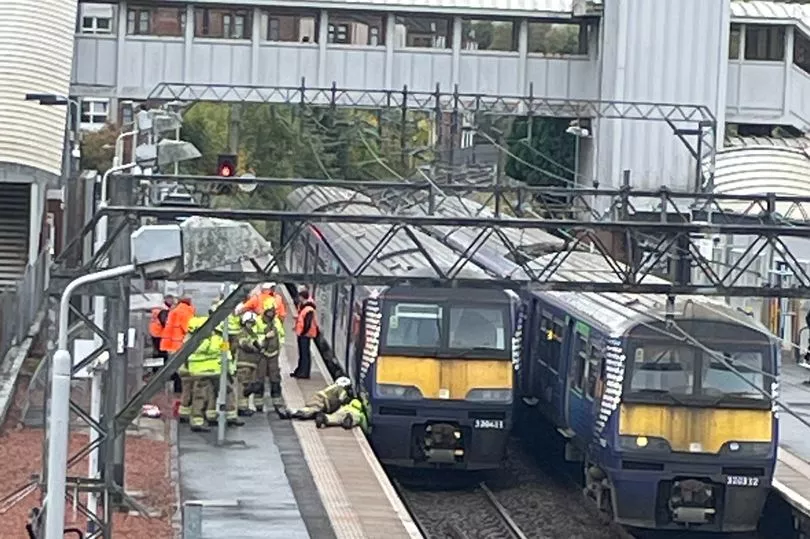
Rail news in Scotland has been abruptly dominated by a disruption of considerable magnitude. Following major damage to the overhead electricity lines, Glasgow Central Station, one of the busiest railway hubs in the United Kingdom, experienced significant service disruptions. This critical situation quickly led to the cancellation and delay of numerous services, impacting thousands of commuters and casting a stark light on the vulnerability of the network’s electrical infrastructure.
The incident, which occurred near the High Level platforms, instantly created a bottleneck. Network Rail, the organization responsible for managing and maintaining British rail infrastructure, immediately warned commuters to expect “major disruption” that would last throughout the day, as they worked to secure the area and begin repairs. To truly grasp the shockwave such an event causes, it is essential to dissect not only the facts but also the technical and logistical mechanisms implemented to manage a crisis of this scale.
The Core of the Breakdown: Where and Why is the Impact So Severe?
The incident is specifically located at the catenary system feeding the upper section of Glasgow Central Station. This distinction, between the High Level and Low Level platforms, is fundamental to understanding the extent of the problem.
An Isolated Technical Failure, National Consequences
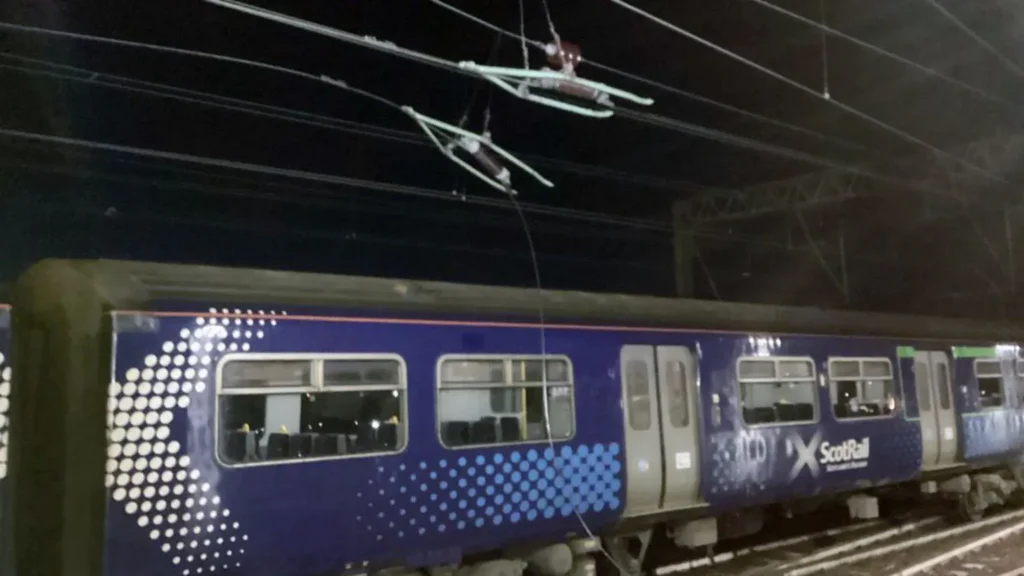
The immediate cause of the disruption is significant damage to the Overhead Line Equipment (OLE), commonly referred to as the catenary. These cables, which carry the high-voltage electricity essential for modern trains, are a vital component of the network. When damaged, they not only fail to power the locomotives but also pose a major safety hazard, compelling an immediate and complete halt to all traffic as a precautionary measure.
Network Rail teams had to undertake complex work to cut and isolate the damaged sections, confirming the severity of the structural damage. The technical difficulty was compounded by the presence of a train immobilized directly beneath the degraded electric wires, making securing and repair operations particularly challenging.
The Crucial Role of Glasgow Central’s High Level Platforms
Glasgow Central Station is strategically divided into two service levels:
- The Low Level: Primarily serves suburban services and the underground network, and was unaffected by the incident.
- The High Level: This is the nexus for mainline services and cross-country links.
The blockage of the High Level platforms instantly paralyzed essential routes:
- Local South Links: Services to Paisley, Ayrshire, and Inverclyde.
- Cross-Border Links: Critical routes to England, notably London (via the West Coast Main Line), Liverpool, and Manchester.
Consequently, the failure was not limited to a simple local inconvenience; it impacted the backbone of the rail transport system connecting Scotland and England.
Technical Challenges: Understanding Catenary Systems and Rail Recovery Operations
For the general public, the halting of trains is simply a result of an “electrical problem.” In reality, repairing damaged OLE is one of the most complex operations in rail engineering, justifying the prediction of disruptions extending “until the end of the day.”
Catenaries: The Lifeline of the Electrified Network
Catenaries are not just simple electrical wires; they constitute a sophisticated power distribution system that ensures the pantograph (the articulated arm on the train’s roof) maintains constant and optimal contact to draw electricity.
A break or damage to the catenary can be caused by several factors: a material defect, extreme weather conditions (not cited here), or, more commonly in this type of situation, a fault with a locomotive’s pantograph catching the cable and tearing it down. Regardless of the cause, the repair requires several long, painstaking steps:
- Safety and Power Disconnection: Ensuring the area is completely free of high-voltage current for the safety of the workers.
- Moving the Stranded Train: The first task for Network Rail was to move the trapped train from under the damaged lines. This requires using specialized diesel locomotives or hydraulic equipment, as the train is no longer electrically powered, adding crucial hours to the recovery timeline.
- Cable and Support Replacement: Damaged wires must be cut, supports replaced, and new contact wires carefully pulled and tensioned to ensure service continuity and prevent future incidents.
The Separation of Roles: Network Rail vs. ScotRail
Crisis management is shared by two key stakeholders, which is important for passengers to understand:
- Network Rail: The Infrastructure Manager. Their role is to repair the lines, secure the track, and manage the infrastructure.
- ScotRail: The Train Operating Company (TOC). Their role is to manage passengers, schedules, cancellations, information, and compensation.
This distinction explains why, even while Network Rail engineers are working on the track, ScotRail must handle the resulting human and logistical repercussions.
Mitigation Strategies and Passenger Rights
Faced with the impossibility of immediately restoring full service, ScotRail quickly implemented palliative measures to minimize inconvenience.
Contingency Capacity: Utilizing Available Platforms
ScotRail’s announcement that they could use platforms 12 through 15 signals a partial contingency capacity:
- These platforms were used to restore some services to Ayrshire and Inverclyde.
- However, “all other services south of Glasgow Central will remain disrupted,” indicating that the critical junction (likely the high-traffic platforms used for mainline trains) is still out of service.
Phil Campbell, ScotRail’s customer operations director, issued the company’s apologies, emphasizing shared frustration and the hard work of Network Rail’s teams.
Cross-Border Connections and Alternatives
For passengers heading south (London, Liverpool, Manchester), disruptions are often managed by:
- Rerouting: Using alternate, often much longer, routes via other unaffected stations.
- Transfers: Organizing replacement bus services between Glasgow and a station where rail services can resume.
- Outright Cancellation: The most frequent and difficult option when the failure affects such a critical main line.
The Right to Compensation: The Delay Repay Guarantee
A crucial point for travelers is the guarantee of their rights in the event of disruption. ScotRail, like most British operators, adheres to the Delay Repay Guarantee.
- Principle: Any passenger delayed by 30 minutes or more (even if the cause is beyond the operator’s control, such as an infrastructure failure) is entitled to compensation.
- Procedure: Compensation claims are processed easily via the ScotRail website or app. The amount of compensation increases with the duration of the delay (e.g., 50% of the ticket cost for a 30- to 59-minute delay, 100% for delays over 60 minutes).
This is a vital legal measure that provides aggrieved travelers with a clear path to recourse.
The Lessons from a Day of Chaos
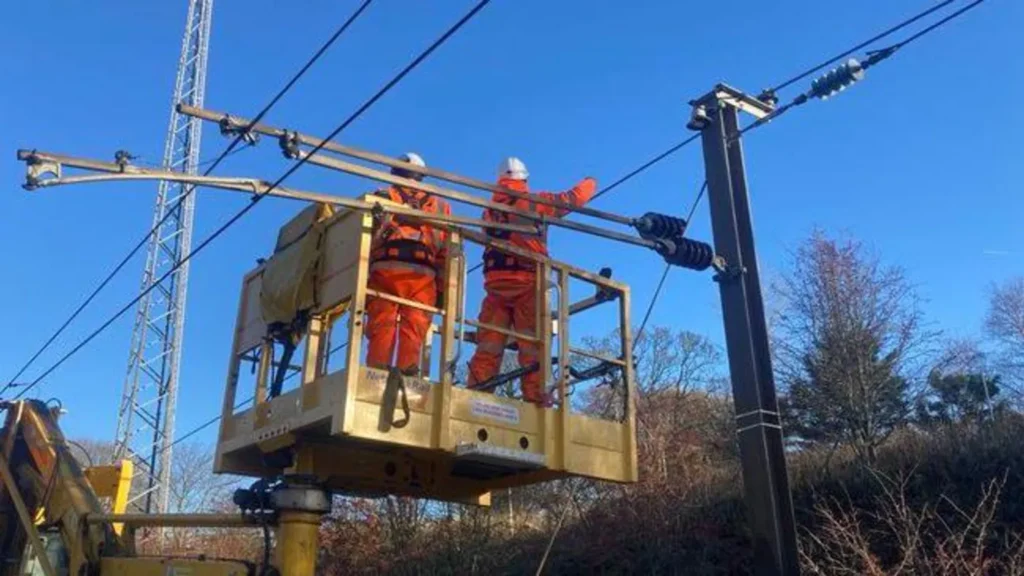
The overhead line failure at Glasgow Central is a powerful reminder of the complexity and fragility of modern railway systems. Although Network Rail engineers worked tirelessly to isolate the area, remove damaged equipment, and begin structural repairs, the impact on the network was immediate and severe.
The event underscores the vital importance of investing in resilient infrastructure and having robust contingency plans in place. As the waiting continues and numerous journeys are canceled or diverted, travelers are looking to official announcements for the exact moment when full service will resume. The network’s performance in the coming days will be judged not only on the speed of the repair but also on the quality of communication and the processing of compensation claims for the thousands of affected passengers.
