
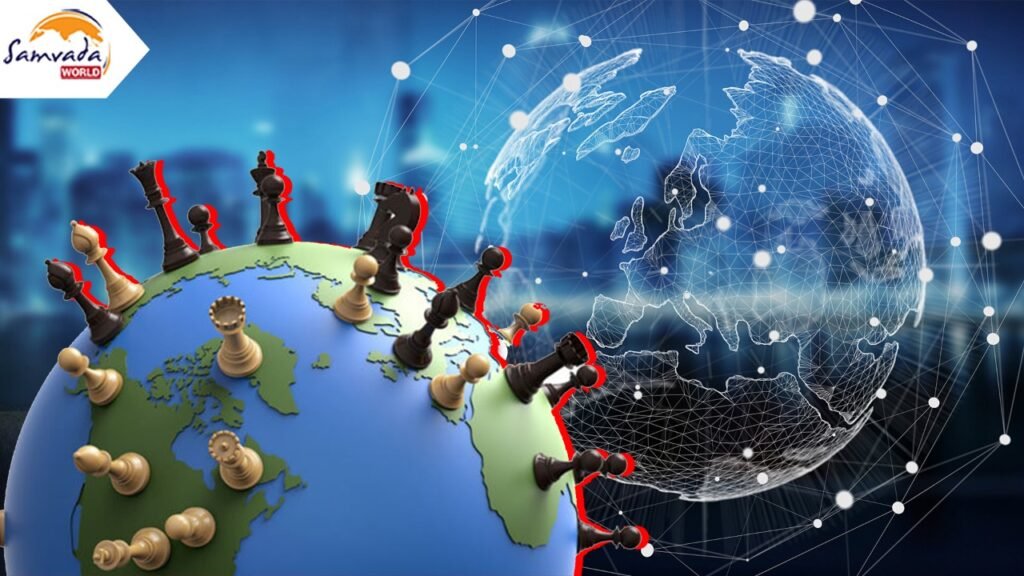
The Interplay: Geopolitics, Technology, and Vulnerability
1. The Weaponization of Technology Dependence
The reliance on a single nation or region for critical technology—a dependency created by decades of optimizing for cost and efficiency—is now seen as a major security weakness.
- Export Controls and Sanctions: Geopolitical rivals (e.g., US and China) now use export controls and trade restrictions as powerful foreign policy tools. By limiting a competitor’s access to vital components (like advanced semiconductors or chip-making equipment), a nation can cripple its rival’s progress in key areas like AI, supercomputing, and next-generation military capabilities.
- The Single Point of Failure: The semiconductor industry, in particular, is highly concentrated. For example, a single company in Taiwan produces a massive percentage of the world’s most advanced logic chips. Any conflict, natural disaster, or major geopolitical event in that region could instantly halt the global supply of critical technology, affecting everything from smartphones and cars to defense systems.
2. The Fragmentation Trend: “Tech Decoupling”
In response to these risks, major powers are actively pursuing policies to reduce their mutual technological dependence, leading to what is often called “tech decoupling.”
| Strategy | Goal | Implications |
| “De-risking” & Reshoring | Build domestic manufacturing capacity and diversify supply chains to “trusted” allies (e.g., US CHIPS Act, European Chips Act). | Higher Costs: Building new, highly advanced manufacturing plants is extremely expensive ($20+ billion). These costs are ultimately absorbed by businesses and consumers. |
| National Technology Champions | Heavily subsidize domestic companies in strategic sectors (e.g., AI, quantum, 5G/6G) to secure national control over key intellectual property (IP). | Market Fragmentation: Creates competing technological ecosystems and standards (a potential “Splinternet”), making it more complex and costly for global companies to operate. |
| Data Sovereignty | Implement regulations (like data localization laws) to ensure citizens’ data is stored and processed within national borders. | Increased Surveillance Risk: While often framed as privacy protection, these laws can also enable greater government surveillance and create barriers to the free flow of information and cloud services. |
3. Impact on Innovation and Global Cooperation
The geopolitical tensions pose risks that extend beyond supply chains and security:
- Stifled Innovation: Historically, cooperation and the free flow of ideas, talent, and capital have been the engine of technological progress. Restricting cross-border research, limiting access to foreign talent, and reducing market opportunities can slow the pace of global innovation.
- Economic Consequences: Trade barriers and tech restrictions increase compliance costs for businesses and lead to market inefficiency. This can reduce overall economic welfare and growth for all involved, including third countries caught in the middle of major power rivalries.
In essence, the desire for technological self-sufficiency is now overriding the economic benefits of global efficiency, fundamentally reshaping the global technology landscape.
For more on the financial implications of this shift, you can check out this discussion on Geopolitical Tensions and Monetary Policy. This video discusses the decade of new risks for monetary policy triggered by geopolitical changes, which is closely tied to economic instability from technology decoupling.
