
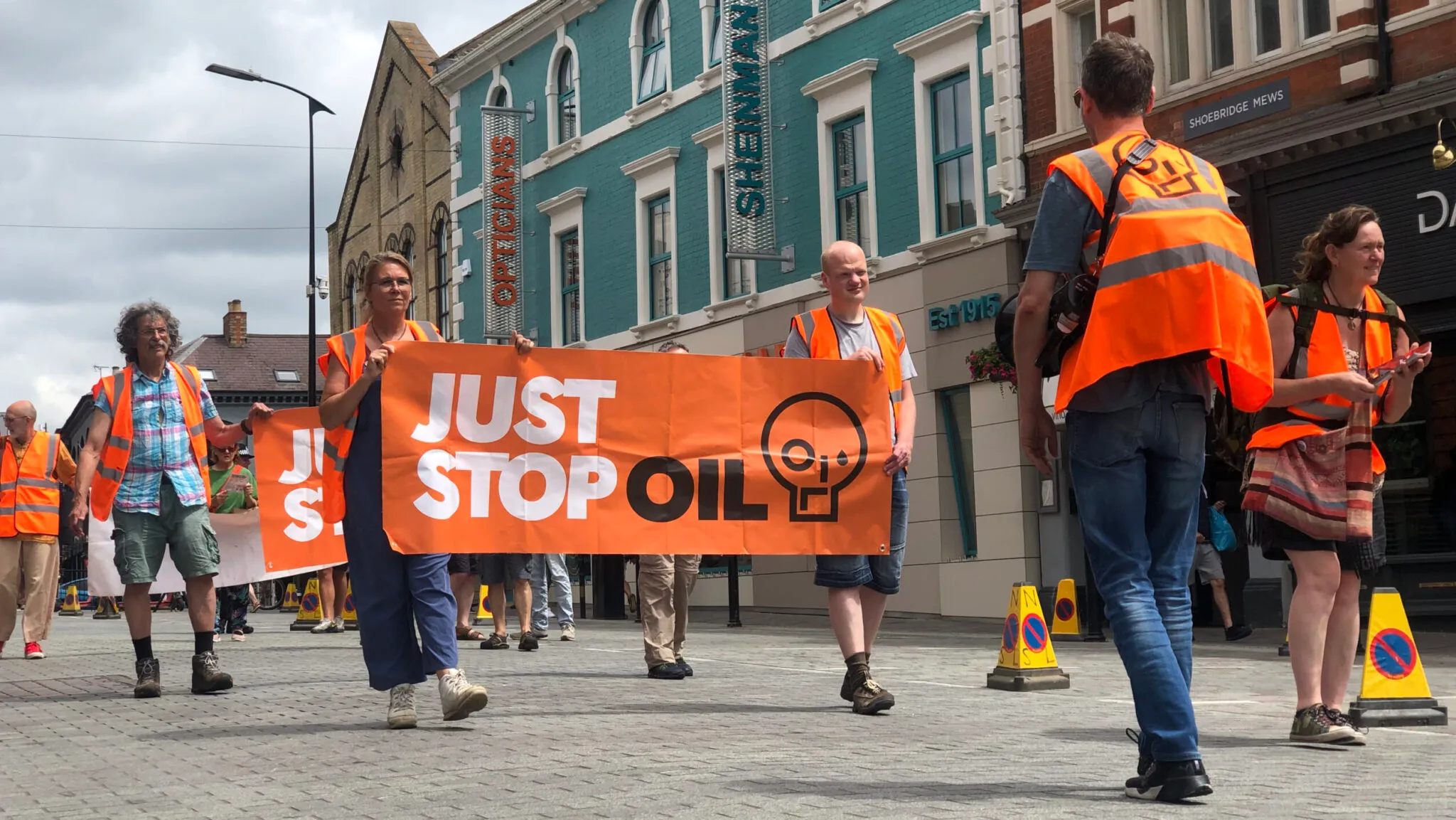
Goals and Tactics
Both groups share the overarching goal of forcing governments to take urgent action on climate change and ecological breakdown, but they differ slightly in their primary demands and tactics:
| Group | Primary Demands | Core Tactics |
| Extinction Rebellion (XR) | 1. Tell the Truth: Declare a climate and ecological emergency. 2. Act Now: Halt biodiversity loss and reduce emissions to Net Zero quickly. 3. Go Beyond Politics: Create and be led by a Citizens’ Assembly on Climate and Ecological Justice. | Mass Non-Violent Civil Disobedience (NVCD): Large-scale, planned disruption (e.g., blocking major city bridges/roads), with a willingness to be arrested en masse to maximize political pressure and media attention. |
| Just Stop Oil (JSO) | Stop all new fossil fuel licensing and production (oil, gas, and coal) in the UK. | Sustained and Disruptive Direct Action: Highly focused, often dramatic actions (e.g., slow walking, climbing oil tankers, throwing paint/soup at cultural objects) designed to cause maximum public and institutional disruption and media controversy. |
Effectiveness of Disruptive Protest
The effectiveness of these groups is not measured by immediate policy wins, but by their ability to shift the broader public and political discourse.
1. The Attention Strategy (High Success)
- Massive Media Amplification: Tactics like throwing soup on a Van Gogh painting (JSO) or mass arrests (XR) generate headlines that conventional protests do not. Research shows these actions lead to huge increases in public awareness of the groups and the climate crisis itself.
- Setting the Agenda: Their disruptive actions have pushed climate change higher on the political and media agenda, often eclipsing coverage of domestic extreme weather events.
2. The “Radical Flank Effect” (Moderate Success)
This is perhaps the most significant, though indirect, impact:
- Shifting the Norm: The existence of a “radical flank” makes the demands and strategies of more moderate climate groups (e.g., traditional environmental NGOs) appear reasonable or mainstream by comparison.
- Legitimising Ideas: Disruptive protest can introduce previously considered “extreme” policies (like rapid fossil fuel phase-out) into mainstream political discussion.
- Increased Activism: Some studies suggest that while people may disapprove of the radical groups’ methods, exposure to the protests can increase overall public concern and a willingness to participate in some form of climate activism.
3. Policy and Financial Pressure (Limited Direct Success)
- Indirect Wins: Direct influence on national policy is rare, but XR’s early actions were linked to the UK Parliament declaring a “Climate Emergency” in 2019, and JSO actions have caused measurable disruption to oil distribution and the financial value of carbon-intensive companies (though these effects are often short-lived).
The Controversies
The primary controversy stems from the groups’ decision to target the general public’s daily life and cultural institutions rather than just industry or government buildings.
1. Public Backlash and Alienation
- Targeting the Innocent: Blocking roads or disrupting public transport alienates commuters, parents, and workers, leading to high levels of public disapproval of the methods. Polls consistently show that while climate concern is high, support for the groups’ tactics is low.Example: JSO’s ‘slow-walking’ protests or blocking ambulances and emergency services (which they deny doing intentionally) have generated intense anger and negative media coverage.
- The “Victim” Narrative: Media coverage often focuses on the inconvenience and negative experiences of the public, which can overshadow the groups’ core climate message.
2. Legal and Political Response
- Harsher Laws: The highly disruptive nature of the protests has prompted governments to introduce or tighten anti-protest legislation, increasing criminal penalties for tactics like “locking on” (attaching oneself to infrastructure) and blocking roads.
- Accusations of Elitism: Critics argue the groups’ tactics disproportionately impact low-income and working-class people who rely on public transport or cannot afford to miss a day of work due to disruption.
3. The “Damage vs. Gain” Debate
- Art and Culture: Actions like gluing to art frames are criticized as damaging cultural heritage and distracting from the core issue, though activists argue the resulting global media attention is worth the risk of temporary, non-permanent damage.
- Moral Imperative: The activists view their actions through a lens of moral necessity, arguing that because the climate crisis is an existential threat, the discomfort and disruption they cause are minor sacrifices necessary to avoid catastrophe.
In summary, the movements are highly effective at generating awareness and urgency but pay the price in public support and increasing legal and political opposition. Their strategy is fundamentally a gamble that mass disruption is the only way to compel political elites to act on an issue of planetary emergency.
