
The Constitutional Line in the Sand
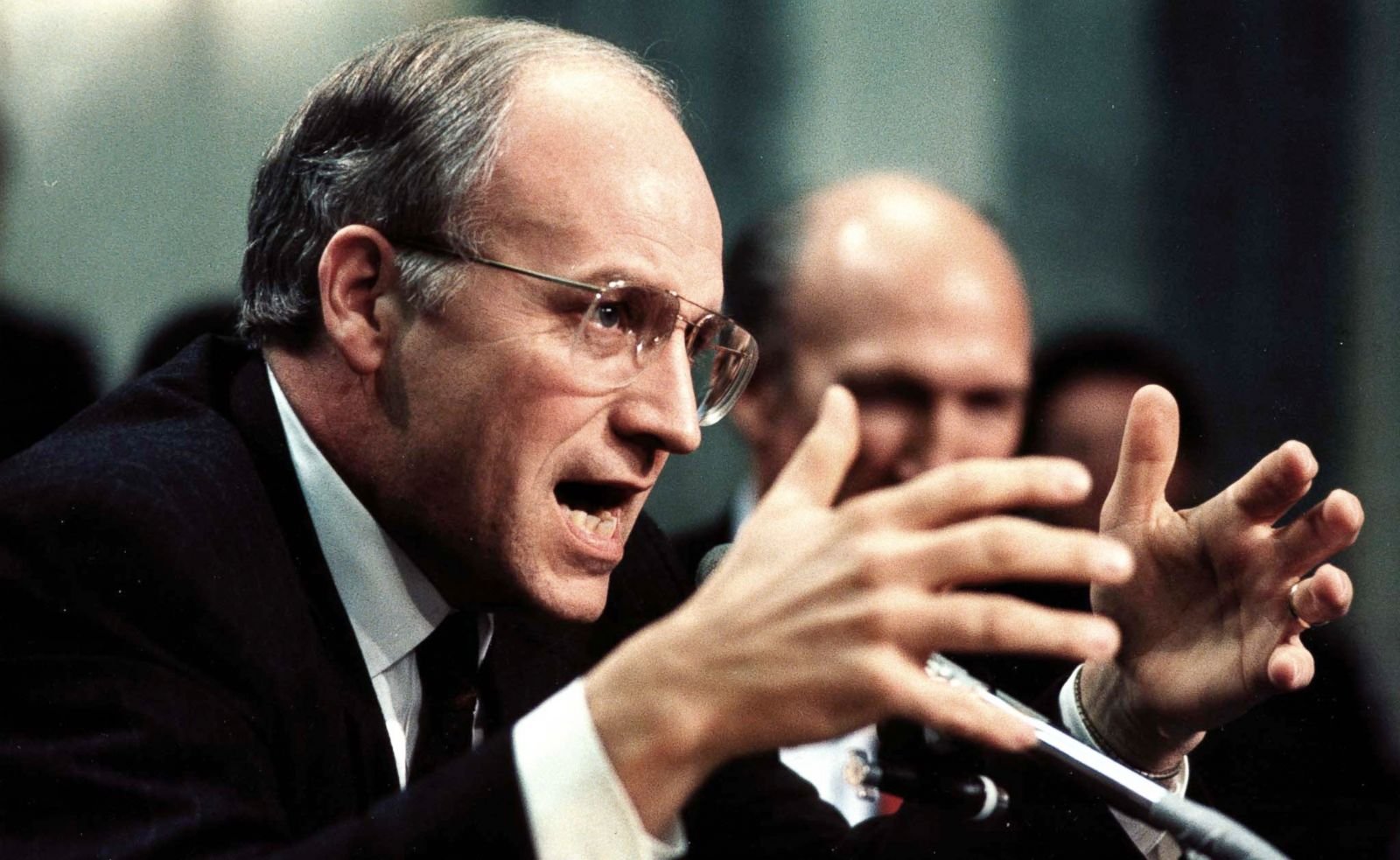
Cheney’s opposition to Trump was not merely political disagreement; it was existential. The former Vice President, who had spent his career advocating for a strong executive branch, viewed Trump’s attacks on the integrity of the U.S. electoral system and his actions surrounding the January 6th Capitol attack as an unprecedented threat to the American Republic. In a powerful campaign ad for his daughter, Liz Cheney, in 2022, he famously declared, “In our nation’s 246-year history, there has never been an individual who is a greater threat to our Republic than Donald Trump.” This position placed him squarely at odds with the modern Republican Party that had embraced Trumpism.
The Unthinkable Endorsement
The ultimate political irony arrived when Cheney announced his endorsement of the Democratic presidential nominee, Kamala Harris, in the 2024 election. For a man who was once the architect of conservative power, publicly supporting a Democrat was a profound declaration that his commitment to constitutional order and principle superseded party loyalty. This action was mirrored by his daughter, former Congresswoman Liz Cheney, who became a leading voice on the January 6th Committee and was subsequently exiled from her own party. Their joint stance crystallized a movement of traditional Republicans—often termed “Never Trumpers” or “Republicans in Name Only (RINOs)”—who chose to align with Democrats to protect democratic institutions.
A Complex Legacy and Democratic Discomfort
For many Democrats, embracing Dick Cheney as an ally was a morally complicated decision. His record on issues such as the invasion of Iraq, enhanced interrogation techniques (which critics called torture), and the expansion of surveillance powers remains, for the left, indefensible. His support for the Democratic ticket was widely celebrated by party leaders as an act of courage and patriotism, yet it was also met with skepticism by progressives who argued that it amounted to a selective moral outrage that glossed over the immense global suffering caused by Cheney’s own policies. They highlighted the irony that the same push for a muscular, unitary executive that Cheney championed ultimately paved the way for Trump to amplify and exploit executive power beyond traditional guardrails.
In the end, Cheney’s late-life opposition to Trump created an awkward but necessary political alliance. It was a moment where the defense of democracy transcended typical partisan boundaries, forcing both the left and the right to reckon with a shared threat that superseded all other policy disagreements.

Great read! I really enjoyed your perspective on this topic.
Thanks for sharing this. Your writing is always so clear and engaging.
Such a valuable post! I’ll definitely be coming back to this.
You always bring a fresh perspective. Really enjoyed this!
Great read! I really enjoyed your perspective on this topic
Great read! I really enjoyed your perspective on this topic