
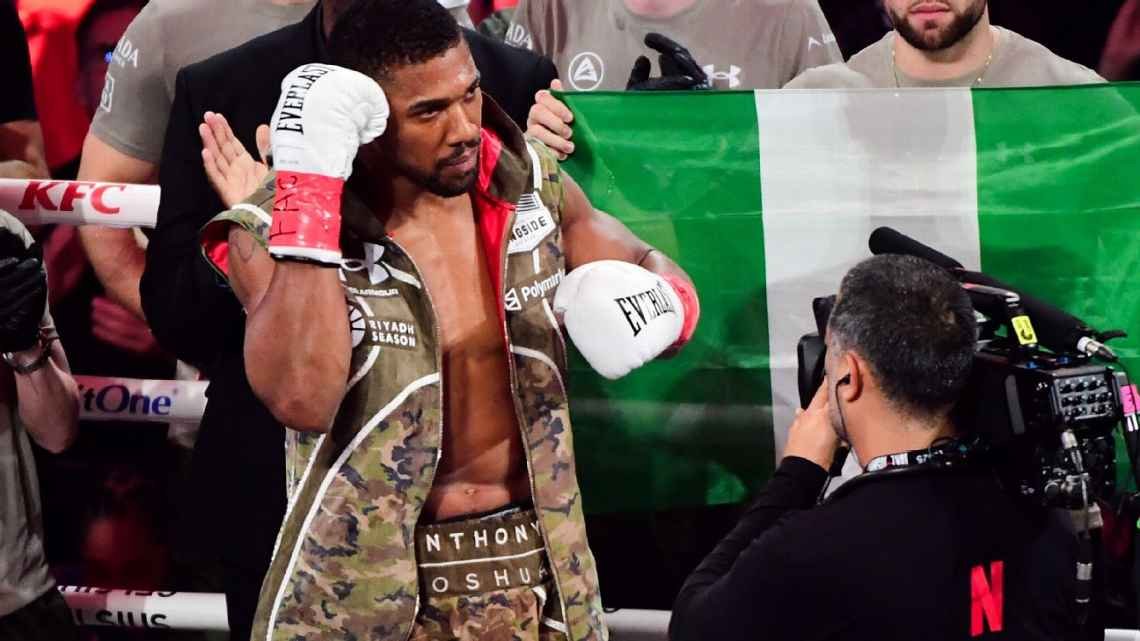
The global boxing community remains in a state of profound shock following the devastating news of a car accident involving former two-time world heavyweight (the premier weight class in boxing for athletes over 200 pounds) champion, Anthony Joshua. While the sports world was still celebrating his recent knockout victory in Miami, the narrative shifted abruptly from triumph to tragedy on a busy stretch of highway in Nigeria. Although Joshua survived the incident with relatively minor physical injuries, the loss of two close friends and integral team members has cast a long shadow over his future.
A Tragic Turn of Events: The Details of the Lagos-Ibadan Collision
The incident took place at approximately 11 a.m. on the Lagos-Ibadan expressway, a vital transport artery that links Ogun State to Lagos, Nigeria’s primary commercial hub. Anthony Joshua, who has deep ancestral roots in the region, was traveling in a Lexus SUV when the vehicle struck a stationary truck. According to the Federal Road Safety Corps (the government agency responsible for maintaining road safety protocols and managing traffic flow), the SUV was attempting to overtake another vehicle at a speed exceeding the legal limit before losing control.
In the world of professional boxing career management, safety outside the ring is as paramount as safety within it. However, the variables of international travel often present unforeseen risks. Local authorities confirmed that while Joshua sustained “minor bruises,” the collision was fatal for two other occupants. The suddenness of the event has highlighted the precarious nature of road safety in regions where infrastructure often struggles to keep pace with high traffic volumes.
Remembering the Inner Circle: The Legacy of Sina Ghami and Kevin Latif Ayodele
To understand the magnitude of this loss, one must look at the roles played by those who perished. Anthony Joshua’s success has always been a team effort, and the loss of Sina Ghami and Kevin Latif Ayodele represents a significant blow to his support structure.
Sina Ghami: The Architect of Physical Performance
Sina Ghami was more than a coach; he was a specialist in sports rehabilitation (the medical and physical process of restoring an athlete to full function after an injury). For over a decade, Ghami was the man responsible for ensuring Joshua’s body could withstand the rigors of world-class combat. His expertise was not limited to boxing; he had previously worked with elite athletes in the NFL and NBA, bringing a high level of academic and practical knowledge to Joshua’s camp. His presence was a constant in Joshua’s life, from training camps in Miami to visits to the Joshua family estate in Nigeria.
Kevin Latif Ayodele: A Lifelong Mentor
Kevin Latif Ayodele served as Joshua’s personal trainer and had been by his side since the very early stages of his amateur career. The bond between them was evident in their final social media posts, which showed them engaging in lighthearted activities just hours before the crash. Ayodele was often described as the “emotional anchor” of the team, providing the mental fortitude necessary to navigate the pressures of the heavyweight division (the most prestigious and high-pressure category in professional boxing).
The Physical and Psychological Recovery Process
While Eddie Hearn of Matchroom Boxing (the prominent sports promotion company representing Joshua) has stated that the boxer is “well and responding to treatment,” the path to a full recovery process (the period of time spent regaining health and strength) will likely be more mental than physical.
Joshua was taken to a local hospital for observation to rule out any internal injuries or delayed concussions. However, the psychological impact of surviving a crash that claimed the lives of two “brothers” cannot be understated. In high-stakes sports, mental clarity is as important as physical power. Joshua will now have to navigate a period of intense grief while the eyes of the sporting world watch for his next move.
Road Safety Protocols and Infrastructure in Focus
This accident has reignited a fierce debate regarding road safety protocols (the rules and infrastructure designs intended to prevent traffic accidents) in Nigeria. The Lagos-Ibadan expressway is notoriously dangerous, with local media reporting over 600 fatalities in a 27-month period.
The presence of stationary trucks on the roadside—a primary factor in this crash—remains a significant hazard. For a global icon like Joshua to be caught in such a tragedy serves as a grim reminder of the daily risks faced by commuters in the region. There is now a growing call for Nigerian authorities to implement stricter enforcement of speed limits and better management of broken-down vehicles on major highways.
Looking Ahead: The Impact on Future Fights
The timing of this tragedy is particularly poignant. Joshua was coming off a dominant performance against Jake Paul, a fight that saw him secure a knockout (a victory awarded when an opponent is unable to rise before the referee counts to ten). This win was supposed to be the springboard for a 2026 campaign to reclaim his world titles.
The impact on future fights is currently secondary to Joshua’s well-being, but it remains a topic of discussion among analysts. Joshua will likely take an extended hiatus from the ring. The loss of his strength coach and personal trainer means he will eventually have to rebuild his entire training camp from the ground up. Whether he can find the motivation to return to the sport after such a personal loss remains to be seen.
Anthony Joshua has always been a symbol of resilience, often quoting his Nigerian heritage as the source of his “fighting spirit.” As he recovers in the quiet of his family’s ancestral home in Sagamu, the world waits to see how this champion will navigate the most difficult fight of his life-one that isn’t taking place inside a ring, but within his own heart.
