
1. Technical and Material Challenges
- Complexity of Plastic Types: The term “plastic” includes numerous polymers (PET, HDPE, PVC, LDPE, PP, PS, etc.)
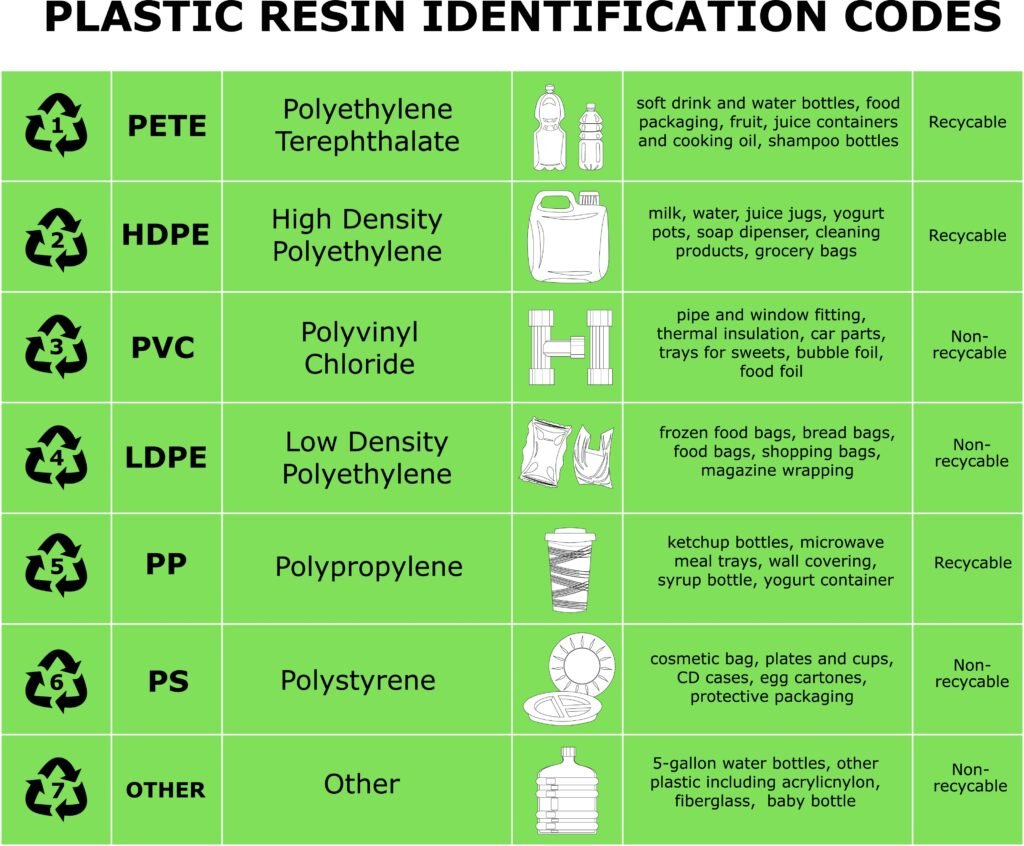
which have different chemical compositions, melting points, and properties. Mixing these types (e.g., a PET bottle with a PP cap) severely reduces the quality and value of the final recycled material, often leading to “downcycling” or rejection.
- Contamination: Residue from food, liquids, glues, non-plastic labels, and dirt mixed with plastic waste makes sorting and processing difficult and costly. Even a small percentage of contamination, like PVC in a PET stream, can ruin a large batch for high-value applications like food-grade packaging.
- Design for Recycling (DfR): Many products are manufactured with little consideration for their end-of-life. Multi-layer packaging (laminates of different plastics or plastics mixed with foil/paper) and hard-to-separate components make recycling technically impossible or economically non-viable.
- Material Degradation: Mechanical recycling (melting and reforming plastic) causes the polymer chains to shorten. This reduces the quality, strength, and durability of the plastic, limiting the number of times it can be recycled before becoming unusable.
2. Economic and Market Challenges
- Low Cost of Virgin Plastic: Recycled plastic (resin) must compete with virgin plastic, which is derived from fossil fuels. When crude oil prices are low, virgin plastic is often significantly cheaper and more abundant than high-quality recycled material, destroying the economic incentive for recyclers.
- Price Volatility: The market price for recycled plastic fluctuates, making it difficult for recycling facilities to plan long-term investments in infrastructure and technology.
- Lack of Market Demand for Recycled Content: While corporate pledges are increasing, consistent, mandatory demand for recycled content in new products is often lacking, especially for non-PET/HDPE plastics. This leads to weak or non-existent markets for certain recycled polymers.
- High Cost of Operations: Collection, sorting (especially for mixed, low-value plastics), and cleaning require significant investment in specialized equipment, energy, and labor, making recycling operations costly.
3. Logistical and Systemic Challenges
- Inadequate Infrastructure: Many regions, particularly developing nations and rural areas, lack the sophisticated collection systems, sorting facilities (Material Recovery Facilities or MRFs), and advanced processing plants needed to handle the massive and complex volume of plastic waste.
- Lack of Standardization: Recycling rules vary widely across cities, regions, and countries. This confusing patchwork of systems leads to high levels of consumer confusion and contamination, further hindering efficiency.
- Poor Collection Rates: In many places, a significant portion of plastic is not collected for recycling at all, ending up in landfills, incinerators, or leaking into the environment. Effective “on-the-go” and commercial collection is often insufficient.
- Lack of Extended Producer Responsibility (EPR): Where manufacturers are not held financially and operationally responsible for the entire life cycle of their products, there is little incentive for them to invest in sustainable design or support recycling infrastructure.
Towards Solutions
The consensus is that a single fix won’t work. A systemic transformation is required, focusing on the waste hierarchy:
- Reduce/Reuse: Policies like bans on single-use plastics and promoting refill/re-use schemes target the problem at its source.
- Redesign: Mandatory Design for Recycling standards to ensure plastics are mono-material, easily separated, and free of problematic additives.
- Invest and Standardize: Significant investment in modern, high-tech sorting facilities (AI, robotics, advanced optical sorting) and the establishment of uniform national/international recycling guidelines.
- Policy and Economy: Implement and strictly enforce Extended Producer Responsibility (EPR) schemes to shift financial responsibility to producers and utilize mandatory recycled content targets to stabilize and increase market demand.
