
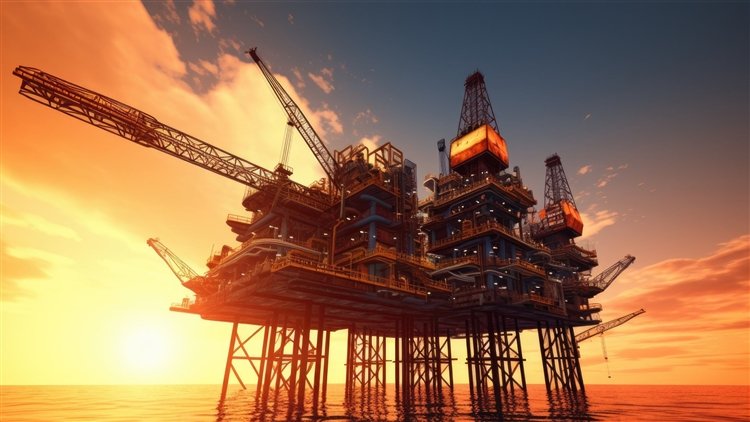
Here is a breakdown of the key arguments for and against new oil and gas exploration licenses:
Arguments For New Exploration Licenses
These points are primarily championed by the industry, some politicians, and those focused on immediate economic and supply concerns:
- Energy Security and Independence:
- Proponents argue that domestic production reduces reliance on volatile global markets and less secure foreign imports (like Liquefied Natural Gas or LNG).1
- Homegrown supply provides a buffer against geopolitical shocks and price spikes .
- Economic Benefits and Jobs:
- New licenses promise billions in investment and tax revenues for the government.2
- They support a vast, highly-skilled domestic supply chain and workforce (especially in regions like Aberdeen, UK), preventing a “talent drain” that could also harm the future development of renewable energy infrastructure.3
- Lower Emissions (Relative to Imports):
- Some argue that oil and gas extracted locally has a lower carbon footprint (Scope 1 & 2 emissions) than importing it from other regions, especially LNG, which requires energy-intensive liquefaction and shipping.4
- Managed Transition:
- They assert that the nation will still need oil and gas for a substantial part of its energy mix (for heating, industry, and electricity generation) for decades, even on the path to Net Zero.5 Domestic production is needed to manage this decline, alongside growing renewables.
Arguments Against New Exploration Licenses
These points are mainly raised by climate scientists, environmental groups, and those pushing for a rapid energy transition:
- Climate Change and 1.5°C Goal:
- The core argument is that new fossil fuel projects are “incompatible” with the international goal of limiting global warming to 6$1.5^\circ\text{C}$, as advised by the International Energy Agency (IEA) and climate experts.7 Emissions from consuming the fuel (Scope 3) are the most significant factor. .
- Little to No Impact on Bills or Security:
- Critics point out that North Sea oil and gas is sold on the international market, meaning domestic production does not significantly lower consumer bills.8
- The basin is mature and in decline, so new fields will contribute only a fraction of total demand and will not end import reliance in the long term.9
- Environmental Damage:
- Extraction activities, including seismic surveys, drilling, and wastewater discharge (“produced water”), can have devastating effects on local marine ecosystems, including fish, whales, and the seabed’s biodiversity.10
- “Stranded Assets” Risk:
- Investment in new fields could become uneconomic as the world decarbonises, creating “stranded assets” and wasting capital that should be invested in cheaper, more reliable renewable energy (like offshore wind, hydrogen, and Carbon Capture and Storage).
The Current Policy Context (e.g., UK)
The policy landscape is often complex, attempting to balance these competing demands:
- Governments may seek to end new licenses for exploration while simultaneously not revoking existing licenses and supporting the continued extraction from existing fields for their lifespan.
- There is a focus on just transition plans to ensure workers in the oil and gas sector are retrained and supported to move into new clean energy jobs.11
- Legal challenges often center on whether the full climate impact, including Scope 3 emissions (from the eventual burning of the oil/gas), must be considered when approving new projects.
