
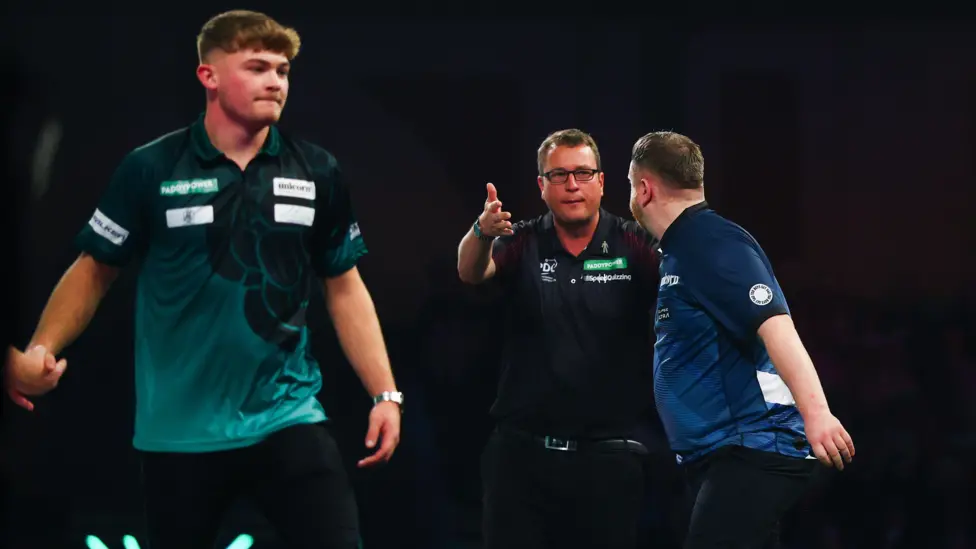
The atmosphere at Alexandra Palace-affectionately known as “Ally Pally” by fans-is usually synonymous with festive cheer, fancy dress, and high-level sporting precision. However, the 2025 PDC World Championship recently witnessed a stark reminder of the intense psychological pressure inherent in elite sports. Cameron Menzies, the 26th seed from Scotland, has issued a public apology following a dramatic exit from the tournament, which saw him injure his own hand in a moment of frustration.
In this analysis, we explore the incident, the personal tragedy behind the outburst, and the broader implications for player welfare in professional darts.
High Tension in North London: The Incident Explained
The first round of the PDC World Championship is often a cauldron of nerves, even for experienced players. Menzies was facing Charlie Manby, a highly-rated English debutant. The match was a rollercoaster, with Menzies initially taking the lead. He led 1-0 and subsequently 2-1 in sets (a “set” in darts is a scoring unit consisting of best-of-five legs). However, the momentum shifted drastically as the 20-year-old Manby mounted a resilient comeback.
When Manby clinched the victory with his seventh match dart, the pressure valve burst for Menzies. In a moment that shocked viewers and attendees alike, the Scottish player struck the underside of his drinks table three times with significant force. The aggression of the act was immediately visible; as he left the stage, Menzies was pictured with blood streaming from a gash on his right hand—his throwing hand. Despite the anger, he briefly held his injured hand up to the crowd in a gesture of apology before being directed away by the referee.
This incident serves as a visceral example of how the fine margins in darts can lead to overwhelming frustration. In a sport where millimeters determine success or failure, the psychological load is immense.
The Human Element: Grief and Mental Resilience
To understand the outburst, one must look beyond the immediate loss. In a slightly academic context, this event highlights the intersection of mental health in sports and performance anxiety. Following the match, Menzies released a candid statement that shed light on the heavy emotional burden he was carrying.
A Personal Tragedy
Menzies revealed that his reaction was not solely about the darts. He had recently suffered a significant bereavement—the loss of his uncle Gary.
“It’s not an excuse, but I have had a lot of things on my mind recently and I suppose it all just became too much at the end,” Menzies stated.
He explained the poignant timing of the tournament, noting that had he defeated Manby, his second-round match would have coincided with the day of his uncle’s funeral. This creates a complex psychological scenario known as “cognitive overload,” where the brain struggles to process intense grief alongside the extreme focus required for professional competition. Menzies admitted that the look his uncle gave him four days before passing away was weighing heavily on him, creating an internal narrative that perhaps intensified the pressure to win.
Taking Responsibility
Despite the context, Menzies maintained a tone of accountability. He emphasized that his grief was “no excuse” for his behavior on stage and expressed regret for potentially overshadowing Charlie Manby’s excellent performance. “This is not how I would like people to view me,” he added, acknowledging that while emotion is part of the sport, his reaction crossed a line.
Regulatory Response and Player Welfare
In professional sports, raw emotion must be balanced against conduct rules. The Darts Regulation Authority (the independent body responsible for disciplinary matters in darts) is set to review the incident.
The Role of the DRA and PDPA
Players found guilty of aggressive, disruptive, or abusive behavior can face sanctions, ranging from fines to suspensions. Wayne Mardle, a former World Championship semi-finalist and current commentator, noted that Menzies “let himself down” and expects punishment to follow. “You’ve got to control yourself… let alone on the biggest stage of them all,” Mardle commented, highlighting the expectation of professionalism regardless of personal circumstances.
However, the response from the organization was not purely punitive. Matt Porter, the Chief Executive of the Professional Darts Corporation (PDC), emphasized a supportive approach. He confirmed that he spoke with Menzies immediately after the incident.
“Our main priority is the player’s health and wellbeing,” Porter stated, reminding the public that support is available through the Professional Darts Players Association (PDPA).
This dual approach—disciplinary review combined with welfare support—demonstrates the modern evolution of sports governance, where the mental state of the athlete is considered alongside rule enforcement.
The Tournament Continues: Veterans and Newcomers Shine
While the Menzies incident dominated the headlines, the darts continued to fly at the Palace, with other key narratives emerging in the tournament.
Peter Wright’s Festive Resilience
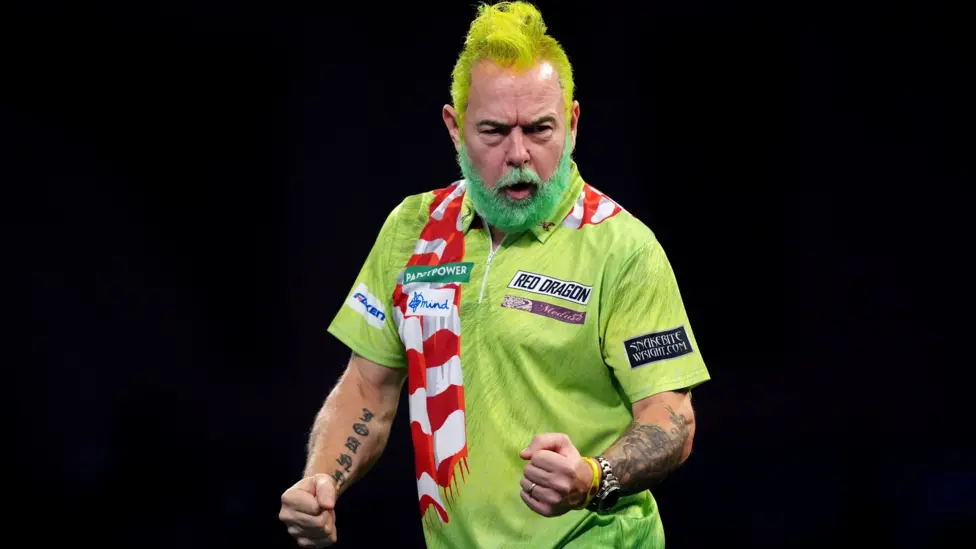
Two-time World Champion Peter Wright, known for his flamboyant style, managed to navigate his first-round match safely. Wearing a festive-themed outfit, the 55-year-old Scot defeated Noa-Lynn van Leuven in straight sets. Wright showcased moments of brilliance, including a spectacular 152 checkout (the final sequence of throws required to reduce a score to zero and win a leg).
Despite the win, Wright was self-critical, admitting to Sky Sports, “I know I didn’t play well but I will play well in the next round.” Currently ranked 30th in the world, Wright is in a phase of rebuilding his form, proving that even former champions must constantly adapt to stay competitive.
The Evolution of the Women’s Series
The tournament also highlighted the growing integration of female players through the Women’s Series. Noa-Lynn van Leuven, the first transgender player to appear at the championship, was one of five qualifiers from the series.
Attention now turns to Beau Greaves, who topped the Women’s Series. She faces Daryl Gurney this Friday, aiming to become only the second female player to win a match at the World Championship, following in the footsteps of Fallon Sherrock. This progression marks a significant shift in the inclusivity and reach of the sport, offering a diverse array of talent for fans to support.
A Lesson in Composure
The 2025 PDC World Championship has begun with high drama, reminding us that darts is as much a test of character as it is of skill. Cameron Menzies’ unfortunate table punch serves as a somber case study in how grief and pressure can overwhelm even seasoned professionals. As the tournament progresses, the focus will hopefully shift back to the dartboard, but the conversation regarding player mental health and the importance of composure under fire remains more relevant than ever.
