
The New Era of the 48-Team Tournament
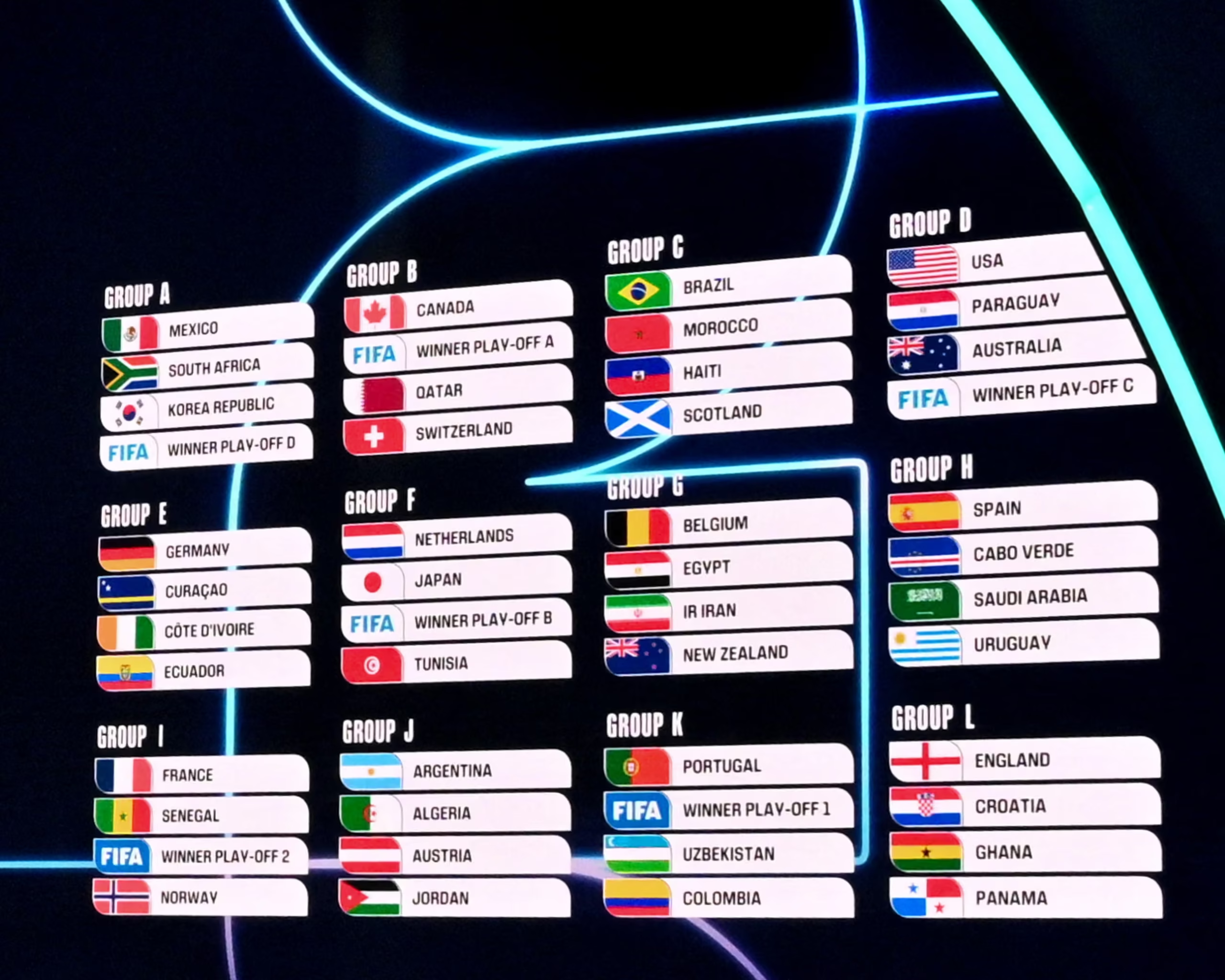
The official draw for the FIFA World Cup 2026, set to be co-hosted by the USA, Canada, and Mexico, has unveiled the group stages for the expanded 48-team tournament. The draw results showcase intriguing geographical and tactical clashes, with established giants facing challenging opponents and debutants finding themselves in high-stakes environments. This comprehensive analysis breaks down every group, highlighting the key narratives and potential surprises.
Group-by-Group Analysis: From Favourites to Firepower
The twelve groups (A through L) are set to deliver a dynamic tournament structure, maximizing global representation and competitive balance.
Groups A, B, C, and D: North American Hosts and Early Challenges
- Group A: This group is headlined by host nation Mexico, who will vie for dominance against South Africa and South Korea. The final spot will go to the winner of UEFA Play-off D (featuring Denmark, Czech Republic, Republic of Ireland, or North Macedonia). Mexico will be expected to advance, but a strong Asian side and a determined African team ensure no easy points.
- Group B: Host nation Canada finds itself alongside Qatar and Switzerland. The group will be completed by the winner of UEFA Play-off A, which includes heavy hitters like Italy, Wales, Bosnia-Herzegovina, or Northern Ireland. Switzerland, known for their tournament stability, will pose a serious threat to the North American hosts.
- Group C: Dubbed a potential “Group of Death,” this features top seed Brazil, the formidable African side Morocco, and the debutant nation Haiti. The group is rounded out by Scotland, making their long-awaited return. The Brazil vs. Morocco match is an early candidate for a classic, while Scotland and Haiti will fight fiercely for an upset.
- Group D: The USA is the top seed here, facing Paraguay and Australia. The final participant will be the winner of UEFA Play-off C (Turkey, Slovakia, Kosovo, or Romania). The Americans must navigate tough South American and Asian opponents before the knockout rounds.
Groups E, F, G, and H: European Giants and African Contenders
- Group E: This group features a strong European challenge from Germany, who must contend with debutant Curacao, the powerful Ivory Coast, and Ecuador. Germany’s technical strength will be tested by the athleticism and pace of their non-European rivals.
- Group F: The Netherlands anchor this group, drawn against Japan and Tunisia. The group will be finalized by the winner of UEFA Play-off B (Ukraine, Poland, Albania, or Sweden). The battle between the European sides and the structured challenges posed by Japan and Tunisia makes this a highly technical group.
- Group G: Belgium leads a classic World Cup quartet alongside Egypt, Iran, and New Zealand. Belgium’s “Golden Generation” remnants must secure victory against the disciplined Egyptian team and the resilient Iranian side, while the All Whites of New Zealand aim to surprise.
- Group H: Spain faces the newest African debutant, Cape Verde, alongside Saudi Arabia and Uruguay. Uruguay and Spain present the historical favorites, but the speed and determination of Cape Verde and the tactical prowess of Saudi Arabia cannot be ignored.
Groups I, J, K, and L: Global Power and Final Showdowns
- Group I: World power France anchors this group, drawn against African heavyweight Senegal and Norway. The final spot goes to the winner of FIFA Play-off 2 (Iraq, Bolivia, or Suriname). The clash between France and Senegal is one of the most anticipated matches, featuring star players from both sides of the pitch.
- Group J: The reigning champions, Argentina, face Algeria, Austria, and debutant Jordan. Argentina will be the overwhelming favorite, but Algeria offers a stern North African derby, and Jordan will be keen to prove their qualification was no fluke.
- Group K: Portugal leads a challenging group alongside Uzbekistan and Colombia. The winner of FIFA Play-off 1 (DR Congo, Jamaica, or New Caledonia) will complete the quartet. This group presents a strong South American challenge to the European giants.
- Group L: This group features European heavyweights England and Croatia—a historic rivalry—alongside the physical power of Ghana and Panama. England will start their campaign against Croatia, a crucial match that could determine the group winner and set the tone for their tournament run.
Summary of Remaining Play-off Deciders
The final four spots allocated to UEFA and the final two global slots allocated to the Inter-Confederation Play-offs will complete the field of 48.
| Play-off Block | Contenders |
| UEFA Play-off A | Italy, Wales, Bosnia-Herzegovina, or Northern Ireland |
| UEFA Play-off B | Ukraine, Poland, Albania, or Sweden |
| UEFA Play-off C | Turkey, Slovakia, Kosovo, or Romania |
| UEFA Play-off D | Denmark, Czech Republic, Republic of Ireland, or North Macedonia |
| FIFA Play-off 1 | DR Congo, Jamaica, or New Caledonia |
| FIFA Play-off 2 | Iraq, Bolivia, or Suriname |
The 2026 World Cup promises to be the most inclusive and competitive edition in history, with the expanded format setting the stage for unpredictable results and the emergence of new global football narratives.
