

A Solemn Warning on the European Stage
On Tuesday evening at Stamford Bridge, the world of football witnessed a major event: a resounding 3-0 victory for Chelsea against FC Barcelona in the Champions League. This was not just a win; it was a show of force, a statement sent to all rivals, and for the Blues, a huge surge of confidence before a crucial series of league matches.
This conclusive score puts an end to Barcelona’s incredible run of 24 consecutive Champions League matches with goals scored (67 goals total), and marks a first for the Catalan coach Hansi Flick, whose teams had never failed to score in this competition before. History will remember the impressive performance of the young prodigy Estevao, the resilience of a team finally showing cohesion under Enzo Maresca, and the tactical and emotional implosion of an unrecognizable Barça side. Let’s dissect the key moments, the tactical analyses, and the dramatic consequences of this encounter.

A Frenetic First Act: Chaos, Disallowed Goals, and the Turning Point of the Match
The match started at a furious pace, typical of big European showdowns. The opening minutes set the tone for an electric evening punctuated by errors.
A. The Saga of Disallowed Goals: When VAR Seemingly Takes Delight
Chelsea thought they had scored several times early in the game, but the scoreboard took time to reflect the hosts’ dominance.
- The First Warning (Handball and Offside): Within the first six minutes, Enzo Fernández found the back of the net after a goalmouth scramble from a corner kick. However, the intervention of VAR (Video Assistant Referee) disallowed the goal, revealing a touch from Wesley Fofana’s arm in the box before Fernández’s finish.
- The Second Denial (Collective Offside): Midway through the first half, Fernández, clearly on form, scored again following a free kick. But once more, the goal was disallowed. The video review showed that Trevoh Chalobah, in an offside position, had touched the ball first.
These two disallowed goals, though frustrating for the players and fans, highlighted the intensity of the pressure exerted by Chelsea and the fragility of the Catalan defence. Barça clearly struggled to position themselves correctly against set pieces and opposition runs.

B. The Breakthrough: An Own Goal and the Fatal Sending Off
It was finally in the 27th minute that Chelsea converted their dominance, thanks to an unfortunate yet deserved goal considering the pressure.
- The Comical Opener: The highly inspired Marc Cucurella delivered a low cross. Instead of being tapped in by a Chelsea attacker, the ball was comically deflected into his own net by Jules Koundé. This own goal symbolized the confusion and lack of composure prevailing in the Barcelona defence.
- Araujo’s Expulsion: The worst was yet to come. Just before halftime, the Uruguayan captain, Ronald Araujo, committed a needless foul on the excellent Cucurella, earning him a second yellow card and subsequent expulsion. Araujo, already cautioned for an unjustified complaint to referee Slavko Vinčić, displayed a fatal lack of composure for his team. Flick’s gesture of shaking his hand as he walked off did not hide the fury over this costly individual mistake.
Playing ten against eleven for the entire second half at Stamford Bridge was the price paid for Catalan indiscipline.
Estevao’s Brilliance and Chelsea’s Tactical Mastery
The second half allowed Chelsea to confirm their superiority, exploiting the space left by Barça’s numerical disadvantage.
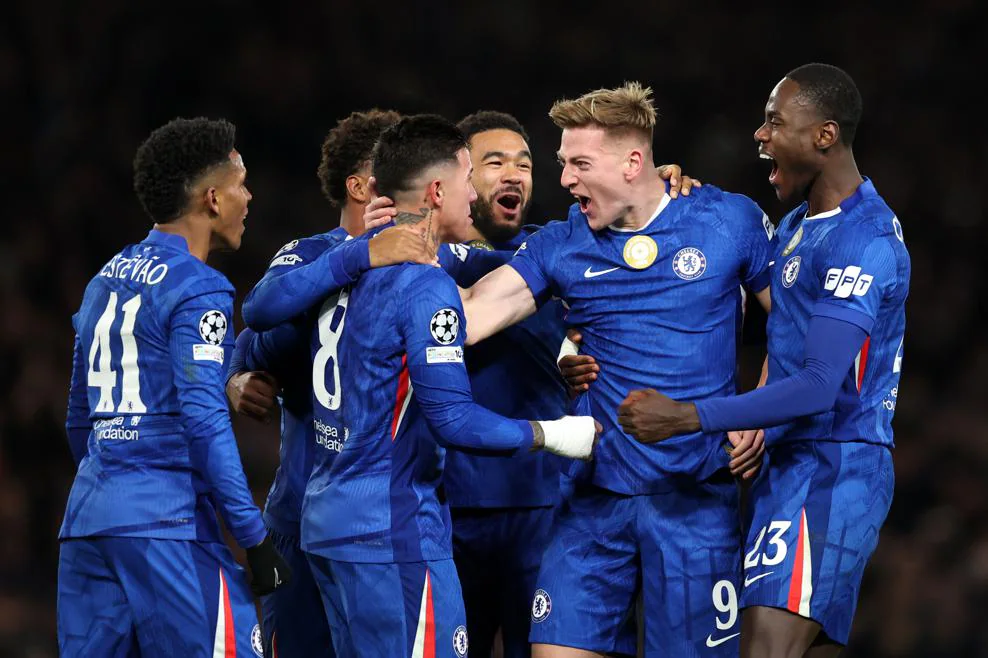
A. Estevao: Chelsea’s Future Lights Up Stamford Bridge
While the final score was 3-0, the most memorable event was undoubtedly the goal scored by the young Brazilian talent Estevao.
- An Individual Masterpiece: In the 55th minute, 18-year-old Estevao produced one of the finest goals of his young career. Regaining possession, he launched into a series of incisive dribbles to penetrate the box before firing a powerful shot into the roof of the net. This goal showcased his raw talent, speed, and ability to take responsibility in big moments.
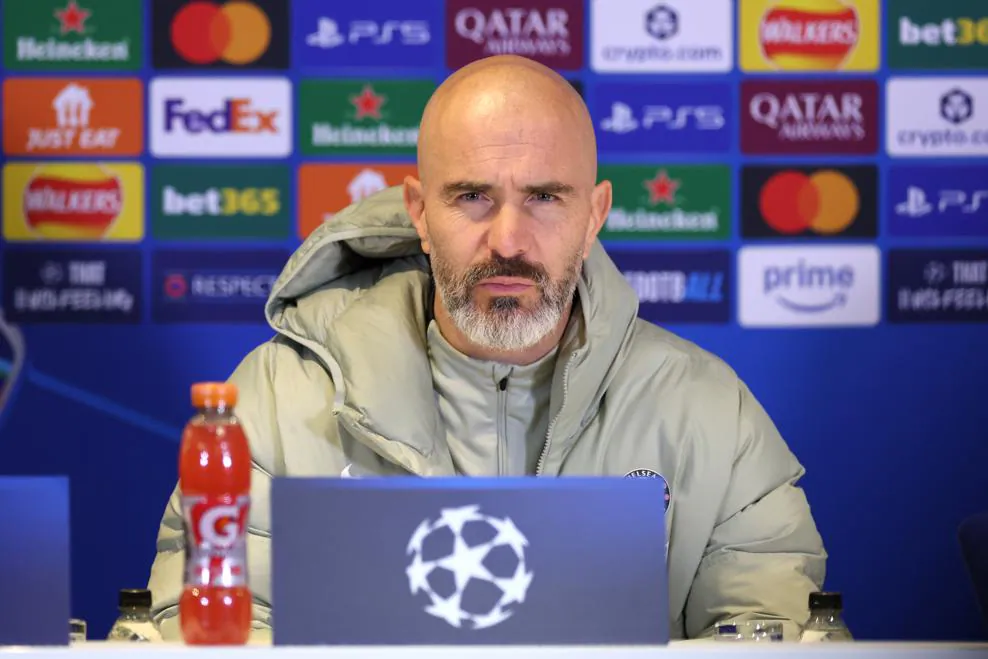
- Maresca’s Caution: Coach Enzo Maresca was full of praise for Estevao, highlighting his pressing and spectacular goal. However, he wisely asked the young player to “relax” and “avoid the pressure” stemming from hasty comparisons to Lionel Messi or Cristiano Ronaldo, insisting that, at 18, these young talents must above all “enjoy playing football.”
B. Delap and the VAR Confirmation
The score was sealed in the 73rd minute by substitute Liam Delap.
- An Unleashed Scorer: Delap, coming on, scored his first goal at Stamford Bridge, a significant personal moment after recovering from injury. The goal was initially disallowed for offside, but VAR intervened to confirm Delap’s position. This double celebration (the euphoria of the goal, then the relief of confirmation) capped off Chelsea’s dynamic offensive performance.
- The End of a Streak: Beyond the score, Chelsea’s defensive performance ended Barça’s 24-match run of scoring at least one goal in the Champions League. This highlights the credit due to the Blues’ defence, but also, admittedly, the shortcomings of the Catalan attack.
Tactical Nuances: Cucurella, the Unlikely Hero, and the Explosion of Rivalry
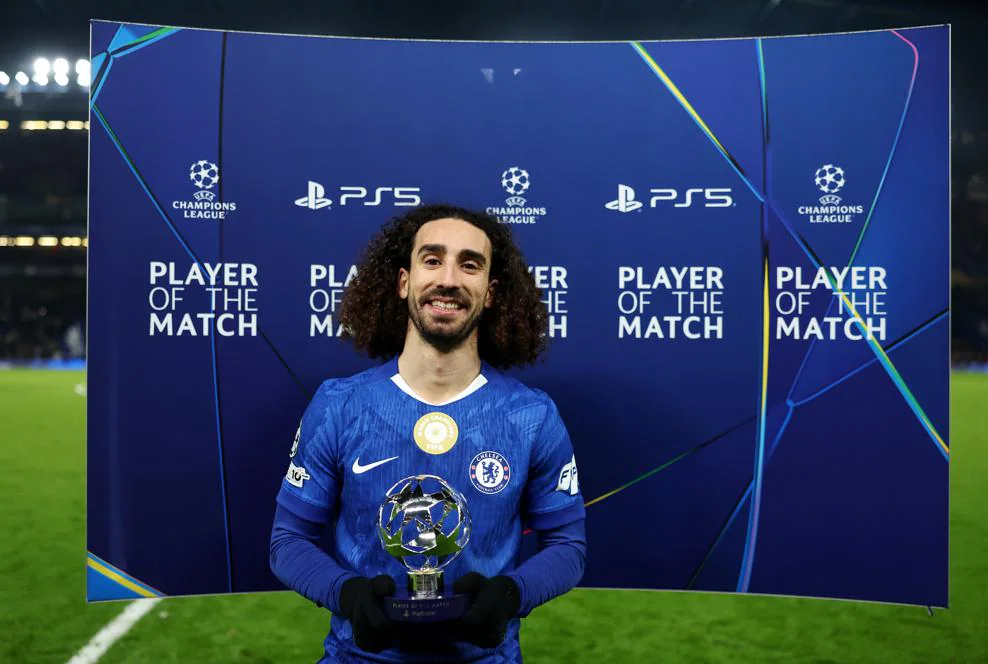
Two crucial elements marked this evening: the individual excellence of one particular player and the psychological power of a crowd that never forgets.
A. A Tribute to Marc Cucurella: The Vengeance of La Masia
Full-back Marc Cucurella delivered a superb performance.
- A Catalan Past: Having spent four years at the famous La Masia (Barça’s youth academy) without ever making the senior squad, Cucurella played with a point to prove.
- The Giant Duel: He effectively neutralized one of Barça’s biggest threats, the prodigy Lamine Yamal, making him look “remarkably average,” according to some observers. His tenacity in one-on-one duels was exemplary.
- The Decisive Impact: It was his surging run that led to Araujo’s red card, and it was his precise cross (even if deflected) that caused the own goal. Cucurella symbolizes Maresca’s success in using full-backs’ offensive runs to destabilize opposing defences.
B. The Memory of Stamford Bridge: The Atmosphere Reaches a New Level
The atmosphere at Stamford Bridge was described as the best in years, rekindling an unexpected but fierce rivalry.
- The Genesis of a Sporting Feud: This rivalry has its roots in several heated clashes, notably the infamous Champions League semi-final match in 2009, where referee Tom Henning Ovrebo denied Chelsea four blatant penalty appeals, leading to a bitter elimination on away goals.
- The Legacy of Anger: Chelsea fans have never forgiven. Mocking chants of “Same old Barca, always cheating” resonated. The crowd, already frustrated with the club’s management on other issues, found a perfect outlet, supporting their team with a rare fervour. Even the goal music, which had been criticized by a fan petition, was sung at the top of their lungs during the opening goal, demonstrating a rediscovered collective euphoria.
Barcelona in Crisis and the Questions Surrounding Flick
For FC Barcelona, the defeat is more than just a setback; it is a symptom of a structural crisis that threatens their European season.
A. The European Chessboard and the Threat of Elimination
With only seven points from five games, Barça’s chances of securing a Top Eight spot for automatic qualification to the Round of 16 now look slim.
- The New UCL Format: The new Champions League format makes the group stage more complex. Finishing between 9th and 16th place means having to go through a risky play-off round. Barça, once a European powerhouse, finds itself on the edge of this trap.
- The Upcoming Challenges: Barcelona still has to face Eintracht Frankfurt, Slavia Prague, and Copenhagen. If they played like last season, nine additional points would be guaranteed. But, given their inability to keep clean sheets, nothing is certain.
B. Hansi Flick’s Tactical Dilemma
The approach of the German coach, Hansi Flick, is increasingly being questioned.
- The High-Risk System: Flick is known for his high-intensity, attacking style of play. However, his current team lacks the maturity and defensive organization required to sustain this ultra-offensive system.
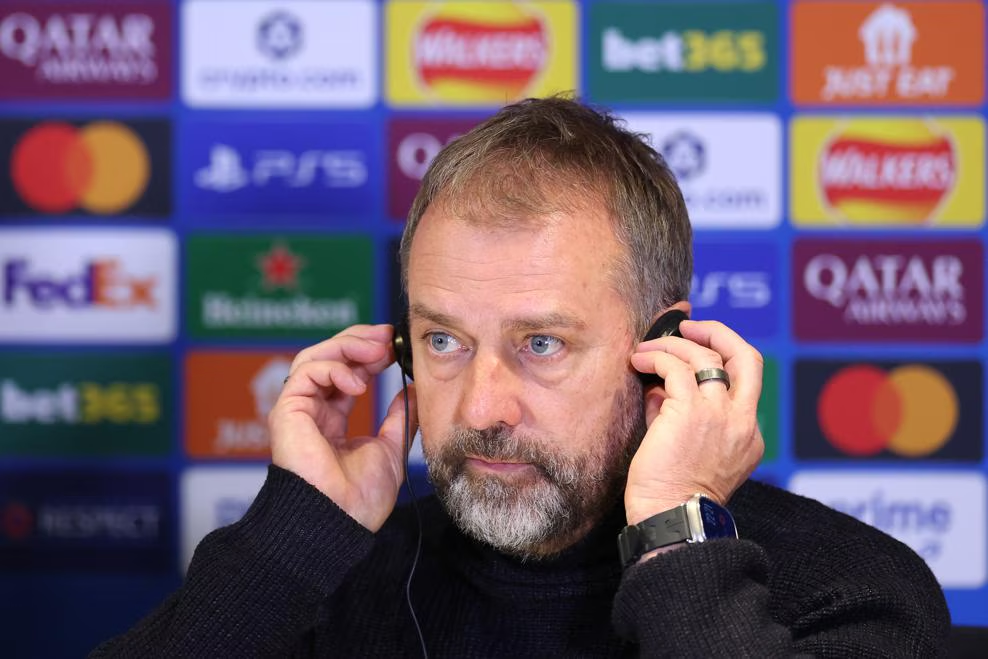
- Lack of Stability: Flick himself acknowledged the need for “more stability,” particularly in one-on-one duels. Chelsea’s performance, which was more physical and dynamic in these situations, exposed Barça’s weaknesses. Despite the defeat, Flick remained positive in his press conference, focusing on the return of injured players (Raphinha, Marcus, and soon Pedri) to regain the intensity they lacked.
A Springboard for Chelsea, a Wake-Up Call for Barça
Chelsea’s 3-0 victory over FC Barcelona is much more than just a result. It is a marker for a team, Enzo Maresca’s side, that is finally finding its cohesion and confidence before the top-of-the-table clash in the Premier League against Arsenal this weekend. The European success provides an invaluable psychological boost.
For FC Barcelona, this defeat, compounded by Araujo’s expulsion due to a glaring lack of emotional discipline, is a deafening wake-up call. If Barça does not quickly manage to regain the intensity and defensive organization that characterized their past successes, the unthinkable could happen: a tough fight to avoid relegation to the Champions League play-offs. The shadow play between these two European giants is far from over, but, for now, it is Chelsea who has sent the clearest message.
