
A Rare Event Shakes the Premier League
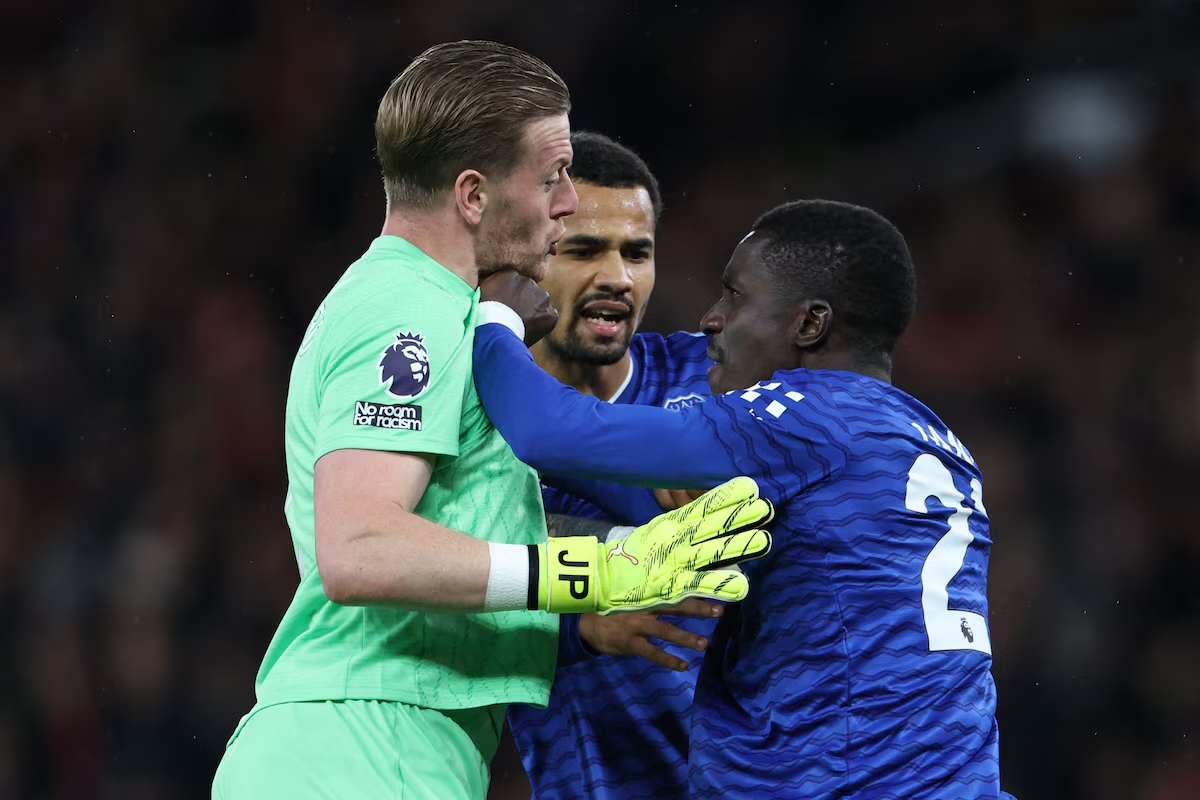
Football, especially at the highest level of the Premier League, is a discipline where pressure and emotion are omnipresent. However, some events go beyond understanding and the usual codes of competition. This is what happened during the Matchday 12 fixture between Everton and Manchester United at Old Trafford, where the Toffees were the scene of a stunning incident: the expulsion of experienced midfielder Idrissa Gueye not for a foul on an opponent, but for hitting his own teammate, defender Michael Keane.
This incident, occurring early in the match, not only marked the game but raises fundamental questions about emotional management, internal discipline, and the psychological impact of sports pressure. How could such an altercation happen so early? And what are the regulatory and human implications of a red card issued for an act of violence between playing partners?
I. The Catastrophic Scenario at Old Trafford: A Nightmarish Start to the Match
Everton’s trip to Manchester United’s historic ground was already a major sporting challenge. No one expected the team to self-destruct in barely a quarter of an hour of play.
A. The Curse of the Opening Minutes
The start of the match, counting towards the 12th round of the English championship, was particularly difficult for the visitors.
- The Early Injury: After only ten minutes of play, Everton suffered a major setback with the injury-forced substitution of their defensive pillar, Séamus Coleman. The captain, replaced by Jake O’Brien, already left his team in a delicate situation requiring a premature tactical adjustment. The loss of a player as experienced as Coleman is always a destabilizing factor.
- The Interruption: The stoppage of play for Coleman’s injury may have created an initial build-up of tension, as players were forced to quickly adapt to an unwanted change, potentially a source of frustration.
B. Idrissa Gueye’s Inconceivable Burst of Anger
Only three minutes after Coleman’s replacement, the incident occurred. The Senegalese midfielder, Idrissa Gueye, lost control of himself.
- The Internal Altercation: Following a verbal dispute with his teammate, defender Michael Keane, Gueye committed an unacceptable act: he slapped Keane. The footage, quickly circulated, confirmed the nature of the act, although the exact cause of the heated exchange remains unknown (poor positioning, tactical error, or general frustration).
- Immediate Expulsion: The referee, without hesitation, showed the red card to Gueye. This act of violence, even directed against a teammate, is considered an act of brutality or violent conduct according to the Laws of the Game by FIFA and the Premier League.
II. The Regulatory and Psychological Analysis of a Red Card Between Teammates
Idrissa Gueye’s expulsion is a rare event that warrants an in-depth analysis of the rules of football and the psychology of athletes.
A. The Laws of the Game: A Banned Gesture, Regardless of the Target
Football is clear about acts of violence. A direct red card is used for several serious offenses, including “violent conduct.”
- Definition of Violent Conduct: According to Law 12 of the Laws of the Game, violent conduct is not limited to opponents. It is defined as using excessive force or brutality against an opponent, a teammate, a match official, a spectator, or any other person.
- The “Slap”: Although a simple slap may seem less severe than a punch, the referee judged Gueye’s action to constitute an intentional and unacceptable physical assault on the field of play. The pitch must remain a place where teammates are protected from each other, and the referee’s authority extends to overt internal discipline.
- Consequences: Gueye, a key player in Everton’s midfield (36 years old, Senegal international), will be automatically suspended for the upcoming matches. This type of offense, if deemed particularly severe or unsporting, can lead to additional sanctions by the Football Association (FA) disciplinary committee beyond the standard single-match suspension.
B. Pressure and Emotional Breakdown
Beyond the rule, this incident is a case study on emotional management among high-level athletes.
- The Stakes of the Premier League: The Premier League is an ultra-competitive environment. Everton, in particular, has often fought to avoid relegation in recent seasons. This constant pressure, exacerbated by the atmosphere of Old Trafford and the rapid loss of Coleman, may have created a breaking point.
- Gueye’s Role: As an experienced defensive midfielder, Idrissa Gueye is supposed to be a leader ensuring balance. His inability to keep his composure, especially towards a teammate, indicates an internal tension or accumulated frustration that exploded at the worst possible time.
- Psychological Consequences: This incident can leave marks not only on Gueye (who must handle criticism and disciplinary consequences) but also on the locker room atmosphere. Rebuilding trust between Gueye and Keane, and more broadly within the team, will be the first mission of the coaching staff.
III. Everton’s Tour de Force: Overcoming Adversity Ten Against Eleven
Fortunately for Idrissa Gueye, the story of this match took an unexpected and heroic turn. Despite being numerically disadvantaged for nearly 80 minutes, Everton managed the feat of winning on Manchester United’s turf.
A. The Heroic Response of the Toffees
The early expulsion had a paradoxical effect: instead of collapsing, the remaining team drew unexpected collective strength from the adversity.
- Reaffirmed Team Spirit: Often, external adversity (playing with ten men) tightens bonds and reinforces tactical determination. The players likely redoubled their efforts to compensate for Gueye’s absence, transforming frustration into defensive and collective energy.
- The Tactical Exploit: Playing 80 minutes at Old Trafford with one player less requires exceptional tactical discipline, physical resilience, and impeccable coaching choices to contain the attacks of a team like Manchester United.
B. The Match Winner: Kiernan Dewsbury-Hall
The only goal of the encounter occurred in the 29th minute, thanks to Kiernan Dewsbury-Hall.
- Importance of Timing: Scoring a goal while short-handed and relatively early in the game (twenty minutes after the expulsion) was crucial. This goal allowed Everton to rely on an ultra-defensive strategy, run down the clock, and rely on the counter-attack, thus maximizing the psychological advantage of the scoreline.
- A Lifeline for Gueye: This historic victory is a lifeline for Idrissa Gueye. It mitigates the enormity of his foul, as his action ultimately did not cost his team any points. However, the victory does not diminish the disciplinary severity of his act in any way.
A Bitter Victory and the Need for Future Reconciliation
Everton’s match at Old Trafford will be remembered not for its single goal, but for the most unusual red card of the season. Idrissa Gueye’s expulsion for hitting Michael Keane is a brutal reminder that even within the intimacy of a team, discipline and respect for teammates are non-negotiable.
Although the surprise victory saved Everton’s night in terms of points, the club’s work is just beginning. The staff must now manage the consequences of this emotional implosion: repairing the relationship between Gueye and Keane, reasserting the club’s authority, and ensuring the incident serves as a lesson. In a sport where cohesion is key, this event underscores the fragility of locker room harmony under the constant pressure of Premier League football.
