
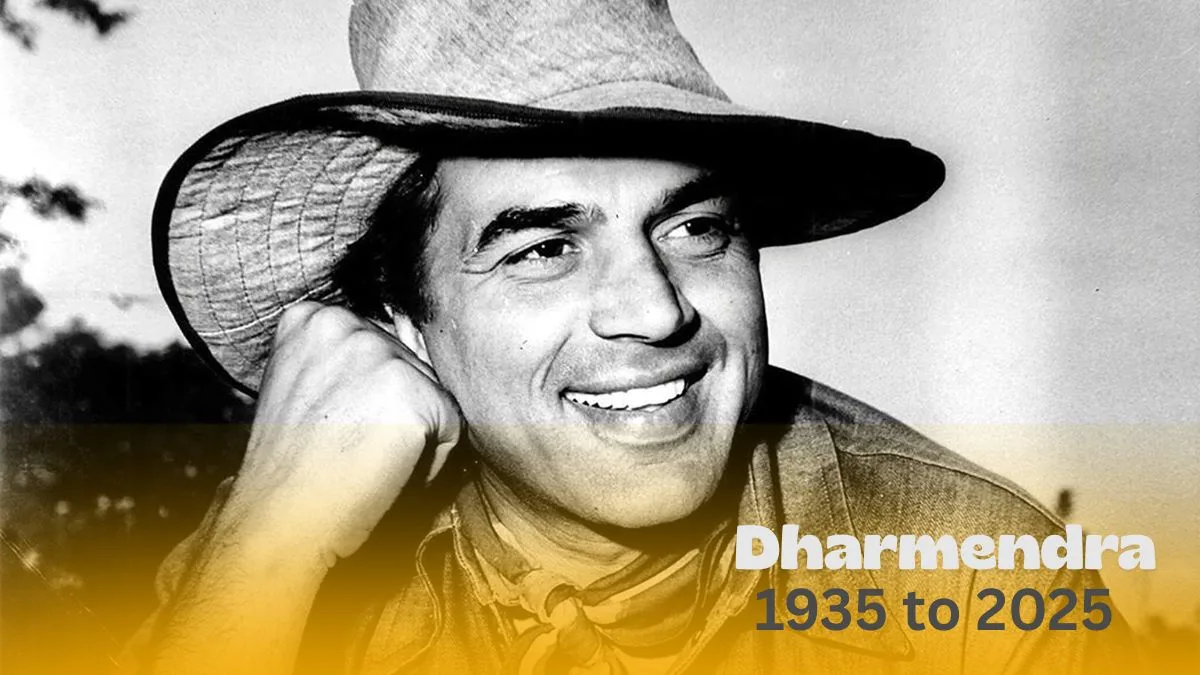
The Passing of an Indian Cinema Giant
The world of Indian cinema is in mourning. Bollywood legend, Dharmendra, has passed away at the age of 89 in the city of Mumbai. The announcement of his death immediately resonated across India and beyond, with Indian Prime Minister Narendra Modi paying tribute, stating that his passing “marks the end of an era in Indian cinema.”
Dharmendra, a man who often humbly described himself as “a simple man,” nevertheless commanded extraordinary affection and loyalty from tens of millions of fans for over six decades. Through more than 300 films, including countless hits, he captivated multiple generations, evolving from a romantic lead to a muscular action hero, ultimately becoming a cultural icon. This article explores the unique journey of the man dubbed the “original He-Man of Bollywood,” from his rural roots to his global peak, and analyzes the lasting legacy he leaves behind.
I. From Modest Origins to the Irresistible Call of the Big Screen
Dharmendra’s story is the archetype of the Bollywood dream: a meteoric rise from a modest background to the glare of the spotlights, driven by immense ambition and striking good looks.
A. Roots in Punjab and the Jatt-Sikh Community
Born on December 8, 1935, as Dharam Singh Deol, he grew up in Nasrali village, in the Ludhiana district of Punjab, within a middle-class Jatt-Sikh family.
- Socio-Cultural Context: The Jatt community, traditionally linked to agriculture and a strong physical and martial culture in the Punjab region, has often provided India with individuals of imposing physique. His father, a schoolteacher, aspired for him to focus on his studies.
- The Cinema Revelation: Dharmendra recounted falling in love with cinema early on. After watching his first film at the age of fifteen, he was immediately hooked: “I was wondering, where is this heaven where all these beautiful people live? I thought I must find my way there.” This youthful fascination would define his destiny.
B. The Beginning of a Legend: The Filmfare Talent Contest
When Dharmendra shared his dream of becoming an actor with his family, they were appalled, reminding him of his responsibilities as the eldest child. To indulge his passion, his mother encouraged him to enter the national talent contest organized by Filmfare magazine, without believing he would be selected.
- The Launchpad: Against all odds, he won the contest. This victory was the key that led him to leave his village for Bombay (now Mumbai) in 1960. This move marked the official start of his career with his debut film, Dil Bhi Tera, Hum Bhi Tere (The heart is yours and so am I).
- A Three-Decade Reign: From then on, and for the following three decades, Dharmendra ruled Bollywood, delivering several major hits every year.
II. The Golden Age: From Romantic Elegance to Action Fury
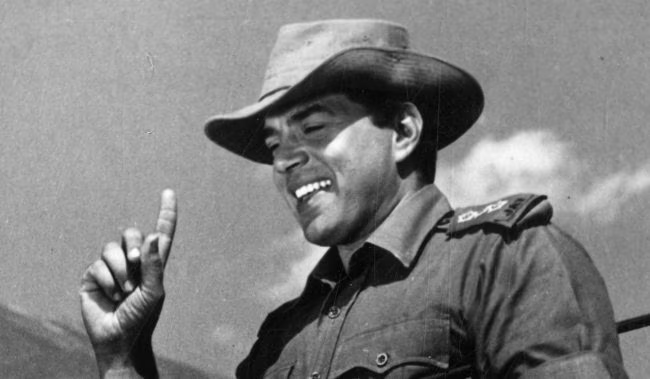
Dharmendra’s success lies in his rare ability to excel in completely opposite genres: he charmed the audience as a sensitive romantic lead before becoming the archetype of the action hero.
A. The Birth of the Romantic Hero
Dharmendra first gained critical acclaim with more nuanced roles. In 1963, he gained recognition in Bimal Roy’s film Bandini, where he elegantly portrayed a prison doctor who falls for a convict.
- Star Pairings: He quickly became a must-see romantic hero, forming memorable duos with the top actresses of the era, notably Nutan, Meena Kumari, Mala Sinha, and Saira Banu. These films cemented his image as a charming and dependable young man.
B. The Transition: From “Flower” to “Rock”
Diversification came in the late 60s and early 70s when the industry sought out more muscular figures.
- The First Action Role: His first purely action role was in Phool Aur Patthar (Flower and Rock) in 1966. But it was the colossal success of Mera Gaon Mera Desh (My village, my country) in 1971 that truly established his reputation as a fearless action hero.
- The “He-Man” Myth: Tall and well-built, Dharmendra was famous for performing his own, often daring, stunts, sometimes taking considerable risks. It is this image of a strong man, but with a heart of gold, that earned him the nickname of the “original He-Man of Bollywood” and “Garam Dharam” (Hot Dharam).
C. Veeru: The Sholay Cultural Phenomenon (1975)
If there is one role that defines Dharmendra’s legacy, it is that of Veeru in the 1975 cult classic, Sholay (Embers).
- Historical Context: Sholay was not just a film; it was a cultural phenomenon that transformed the industry and the Indian box office. This multi-starrer action film featured Dharmendra and Amitabh Bachchan as two lovable rogues recruited to fight a dreaded bandit, Gabbar Singh.
- The Soul of the Film: Although he shared the screen with other legends (including Bachchan, Hema Malini, and Jaya Bachchan), many fans and critics, including the actor himself, considered Veeru the soul of the film. His combination of humour, loyalty, and bravery made the character instantly iconic.
III. An Unconventional Icon: Beauty, Humility, and a Turbulent Romance
Beyond his box office success, Dharmendra’s celebrity was intrinsically linked to his persona: a nearly mythological physical beauty and a sentimental life that made headlines.
A. The “Greek God” Myth
Dharmendra was regularly included in global lists of the “most handsome men” of his time.
- Universal Charm: Bollywood female stars like Madhuri Dixit and Jaya Bachchan (who called him a “Greek God”) publicly praised his looks, and Salman Khan described him as the “most beautiful looking man” he had seen on screen. His fans’ affection reached fever pitch, with some female admirers reportedly sleeping with his photographs under their pillows.
- The Icon’s Humility: Far from arrogance, Dharmendra always said he was “embarrassed” by talk of his looks, attributing his beauty to “nature, [his] parents and [his] genes.” This detachment from his sex-symbol status strengthened his appeal to the general public.
B. The Marriage That Made Headlines: Dharmendra and Hema Malini
His most successful partnership, both on-screen and off, was with the legendary actress Hema Malini.
- On-Screen Chemistry: Their romance blossomed in the 1970s through hit films like Seeta Aur Geeta, Raja Jani, and of course, Sholay. They quickly became one of the most idolized couples in the industry.
- The Personal Challenge: Their love story generated heated headlines, as Dharmendra was already married to Prakash Kaur and had adult children (including actors Sunny and Bobby Deol). The resistance from Hema Malini’s family to their union was widely reported, but the couple finally tied the knot in 1980.
- The Controversy: At the time, rumors circulated that they had converted to Islam—a religion allowing polygamy—to bypass Hindu marital laws, a claim Dharmendra later formally denied.
IV. A Legacy Defined by Love, Not by Titles
Despite his monumental career, Dharmendra always maintained a distance from industry pressures and academic accolades.
A. The Refusal of the Race for Prestige
Despite his dozens of hits, Dharmendra never achieved the official “Number One” position in Bollywood, a title often awarded to contemporaries like Dilip Kumar, Rajesh Khanna, or Amitabh Bachchan. He was also frequently snubbed by the prestigious Filmfare Awards (the Indian equivalent of the Oscars) during his peak years.
- The Actor’s Philosophy: However, Dharmendra did not view this as a failure. He consistently stated that he did not chase honors or record salaries, preferring simplicity: “I never asked for too much money, and fame is transient. All I ever wanted was people’s love… I came here just for this love.”
B. Late Honors and the Ephemeral Political Detour
Official recognition eventually arrived:
- Accolades: In 1997, Filmfare awarded him the Lifetime Achievement Award for his contribution to Hindi cinema. Later, in 2012, he was conferred the Padma Bhushan, one of the highest civilian honors bestowed by the Indian government.
- The Political Episode: He also briefly ventured into politics under the banner of the BJP (Bharatiya Janata Party, the Hindu nationalist party), serving as an MP for Bikaner, Rajasthan, from 2005 to 2009. However, he was heavily criticized for poor attendance and lack of interest. He himself later acknowledged that he was a misfit in politics, describing it as an environment for “thick-skinned people” and not for “emotional people.”
C. The Transmission: Working Until the End
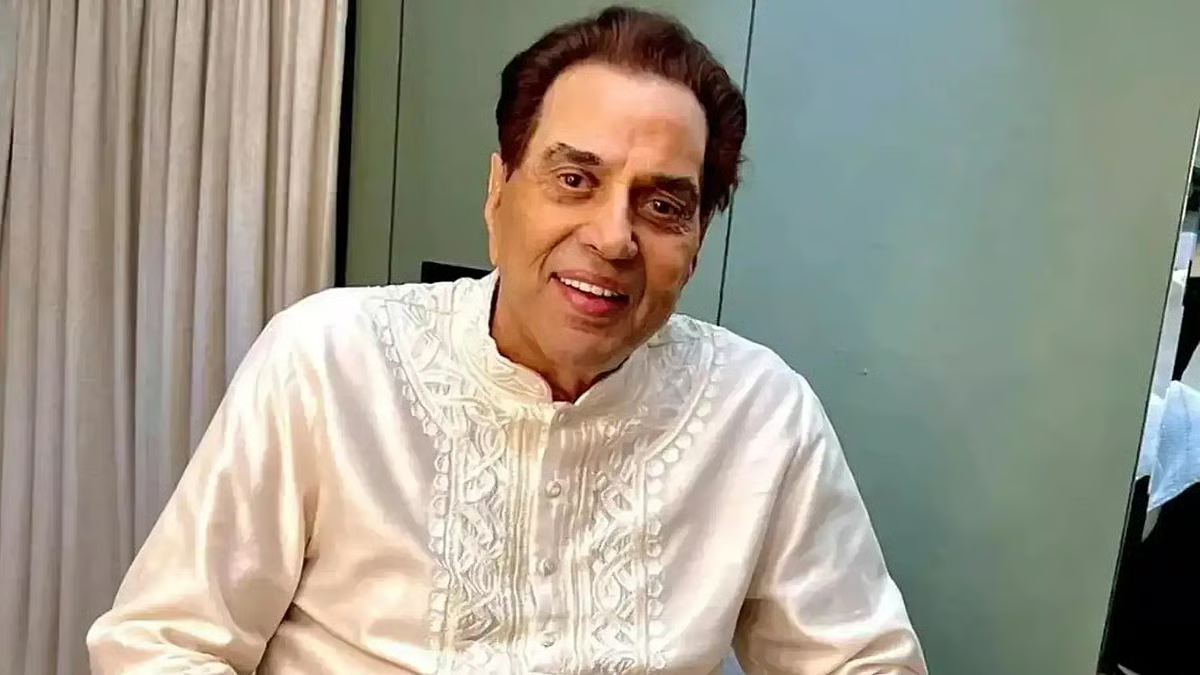
Dharmendra continued to work and maintain his connection with his audience almost until the end of his life, acting alongside his sons, Sunny and Bobby Deol, and remaining active on social media. This longevity testifies to his unwavering passion for the cinematic art.
The Enduring Legacy of the Simple Man
Dharmendra’s death marks, as Prime Minister Modi so rightly said, the end of a major chapter. While he will forever be etched in the collective memory as Veeru from Sholay, his legacy extends far beyond a single role. Dharmendra leaves behind the image of a versatile artist, capable of navigating between romantic melodrama, brutal action, and fine comedy (Chupke Chupke being a reference point). But above all, he is an example of a superstar who wore his status with rare humility. The unanimous tributes from the film fraternity, from Akshay Kumar to Karan Johar, who salute his power of inspiration and his generous heart, confirm that Dharmendra achieved the goal he cherished most: not to be number one, but to be the man whom everyone loves.
