
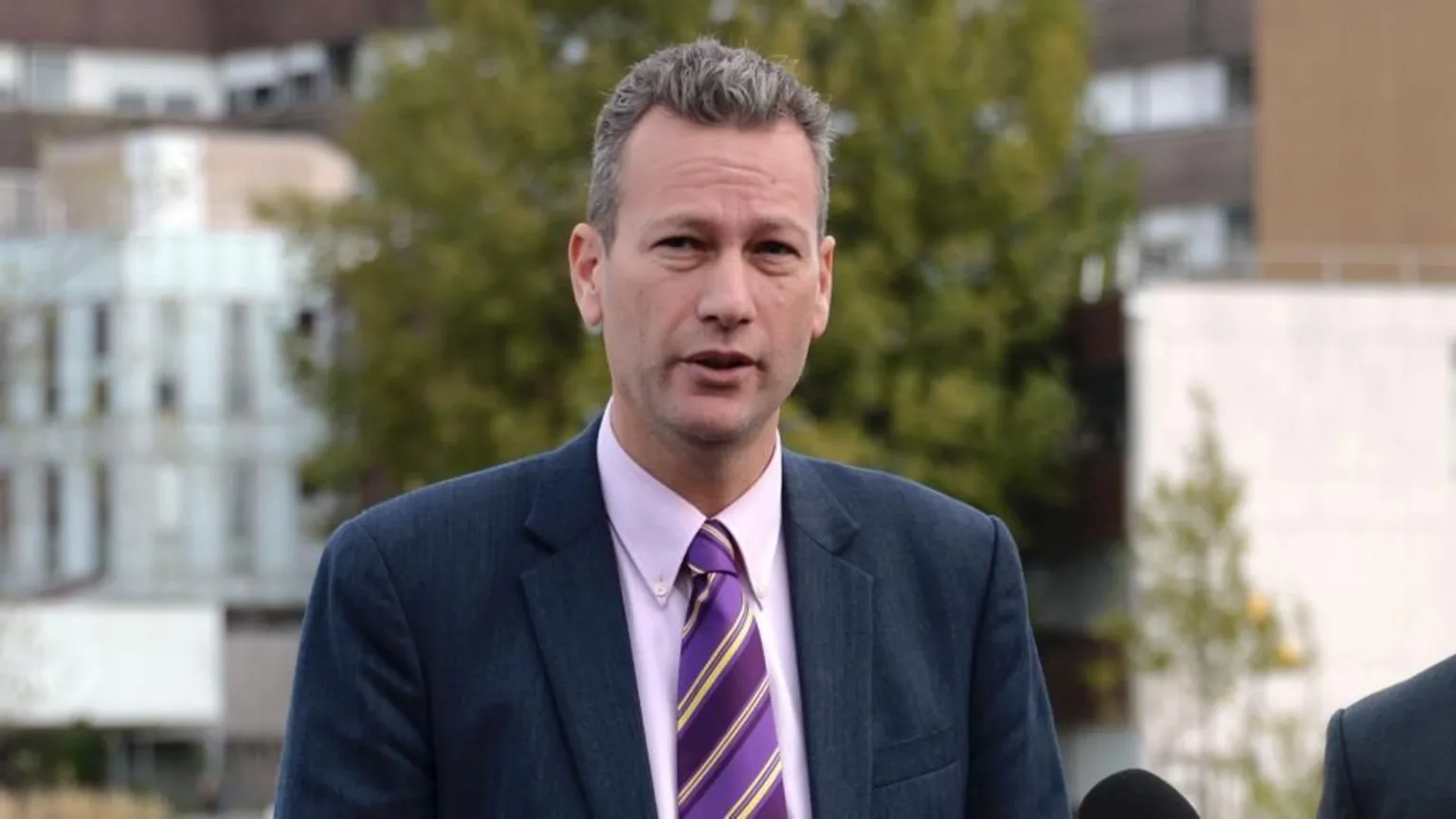
A Shock Verdict in the Heart of British Politics
The British judicial landscape has been shaken by a verdict with major geopolitical implications: Nathan Gill, the former leader of the Reform UK party in Wales, has been heavily sentenced for accepting bribes to make pro-Russian statements while serving as a Member of the European Parliament (MEP).
Sentenced to ten and a half years in prison at the Old Bailey in London, this judgment not only marks the end of Gill’s political career; it highlights attempts at foreign interference aimed at manipulating public and parliamentary discourse in Europe. This case raises fundamental questions about national security, the corruption of elected officials, and the necessity for absolute transparency within political structures. We will dissect the facts, the motivations, the mechanisms of this corruption, and the political shockwave it has generated.
I. Case Details: Betrayal of Trust and Clandestine Manoeuvres
The Nathan Gill affair is of exceptional gravity because it concerns the direct betrayal of a public mandate for personal gain and to benefit a foreign state.
A. The Nature of the Crime: Systematic Bribery
Nathan Gill, a former key member of the political groups led by Nigel Farage in the European Parliament (UKIP, then the Brexit Party), pleaded guilty to eight counts of bribery spanning a period from December 2018 to July 2019.
The mechanism was simple: in exchange for payment, Gill used his position as an elected official to relay specific messages. Mrs. Justice Cheema-Grubb, who sentenced him, was unequivocal: accepting money to deliver pre-scripted statements constitutes a “grave betrayal of the trust” the electorate placed in him. As the judge emphasized, if the opinions were genuine, the payment would not have been necessary.
B. The Intermediary and the Amount Received
The money and instructions came from Oleg Voloshyn, a former Ukrainian parliamentarian linked to a pro-Russian party and identified by police as an alleged Russian asset.
- Amount of the Bribe: Investigators estimate that Gill received the equivalent of at least £30,000 (over 35,000 euros), though the total amount may be higher.
- Communication Method: Exchanges between Gill and Voloshyn were recovered by police and documented via WhatsApp messages, initially revealing coded language (“xmas presents,” “gifts”) before becoming a “regular habit,” with specific sums discussed, such as “I’ll get you 5k.”
- Voloshyn’s Status: The intermediary, Oleg Voloshyn, is now actively wanted by Ukrainian authorities for high treason and is believed to be currently located in Moscow, complicating his arrest.
II. The Geopolitical Objective: Advancing the Kremlin’s Narrative
Nathan Gill’s actions were not random; they were part of a deliberate strategy aimed at influencing the European debate in favor of Moscow’s interests.
A. The Critical Period and the Anti-Ukrainian Narrative
The acts of bribery took place during a particularly sensitive period, preceding Russia’s full-scale invasion of Ukraine in February 2022.
- Dissemination of Propaganda: Gill’s statements were designed to support the Kremlin’s narrative regarding Ukraine, notably by questioning press freedom in Ukraine and advancing perspectives favorable to Russian positions.
- Targeted Platforms: Gill did not limit himself to his interventions in the European Parliament. He also gave interviews and made statements to 112 Ukraine, a Ukrainian television channel known for its pro-Russian leanings and linked to Viktor Medvedchuk, an ally of Vladimir Putin.
B. The Go-Between Role: Bribing Other Elected Officials
Gill’s influence was not limited to his own words. He also served as a middleman, receiving bribes to arrange for other MEPs to make statements to pro-Russian media outlets.
The judge mentioned that Gill enlisted several MEPs (representing the North East, North West, and South West of England) to grant interviews to 112 Ukraine, a service for which he received 5,000 euros. It is important to note that the investigation did not establish that these other elected officials knew Gill was being paid to arrange these interviews.
III. Political Repercussions and Call for Transparency
Nathan Gill’s conviction immediately triggered a political crisis for his former party, Reform UK, and highlighted the persistent threat of foreign espionage.
A. Pressure on Reform UK and Nigel Farage
Immediately following the sentencing announcement, political pressure intensified on party leader Nigel Farage.
- Call for an Independent Investigation: Defence Minister Al Carns called on Reform UK to urgently initiate an independent and thorough investigation into its structures, membership, and donors. The goal is to give the public a “cast-iron guarantee” that any remaining pro-Russian links have been removed from the party.
- Political Damage: Political rivals, notably Liberal Democrat leader Ed Davey, branded Gill a “traitor” and stated that Farage and his party represent a “danger to national security.”
- Farage’s Defence: Nigel Farage, seeking to distance himself from his former colleague, described him as a “bad apple” who betrayed him. However, investigators confirmed they found no evidence that Gill influenced Farage, and the latter was not questioned as part of the investigation.
B. The Accused’s Remorse and Silence
Despite the seriousness of the charges, Nathan Gill offered no explanation of his motivations to investigators.
- Financial Motivation: Police prioritize the hypothesis that Gill was primarily motivated by financial need, though they also noted he had sympathy with the positions he was being bribed to take.
- Judicial Strategy: During his initial questioning, documented by police, Gill chose to repeatedly answer “no comment,” refusing to cooperate with investigators. His guilty plea in September also reportedly took investigators by surprise.
IV. The Context of Espionage and the Police Perspective
The Nathan Gill case is viewed by UK authorities as a textbook example of foreign interference and not as an isolated event.
A. A Real Threat to National Security
Dominic Murphy, Head of the Metropolitan Police Counter Terrorism Command, stated he was concerned about Russian attempts to influence politics and society in the UK.
- An Unprecedented Case: The Gill case is described as the first of its kind encountered by British police, confirming that direct political bribery is an active tactic.
- Geopolitical Stakes: The investigation revealed that authorities were aware that the alleged asset, Oleg Voloshyn, was stopped and his electronic devices were searched at Dulles Airport (USA) in July 2021, months before Gill’s own detention.
B. The Commander’s Impunity
The major difficulty for authorities lies in apprehending Oleg Voloshyn, the alleged mastermind of the operation. His probable location in Moscow makes his extradition highly unlikely.
Despite the positive outcome of the trial for British justice, the Gill case serves as a sharp warning: the threats of espionage and influence from foreign countries, with Russia at the forefront, are a “particular challenge” that requires heightened vigilance and thorough investigations within democratic institutions themselves.
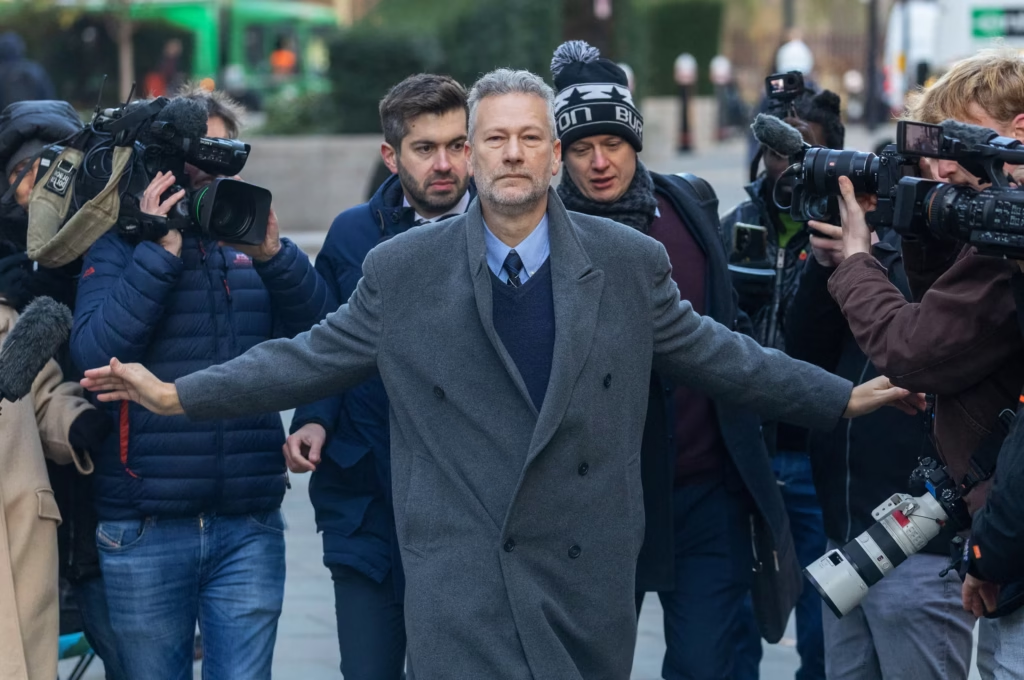
The Imperative of Political Transparency
Nathan Gill’s conviction for over ten years for bribery benefiting a foreign power is a severe judgment that underscores the gravity of betraying public trust. This verdict, delivered during a period of intense geopolitical tension, places British political parties, particularly Reform UK, under an imperative for accountability and total transparency.
Beyond partisan quarrels, this case is a stark reminder that the defense of democracy requires a relentless fight against interference and corruption. The Gill case will remain an emblematic example of how foreign money can be used to subvert European political discourse, compelling leaders and regulatory bodies to maintain unwavering vigilance to ensure the integrity of the democratic process.
